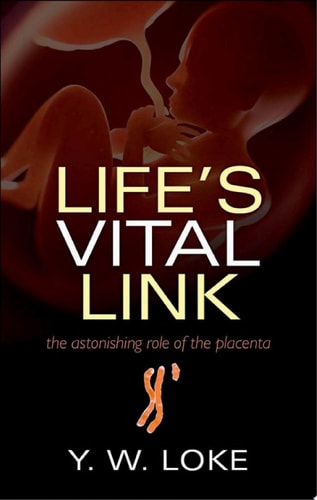
Life's Vital Link: The Astonishing Role of the Placenta
0
0
As an Amazon Associate and affiliate partner, Menrva Books earns from qualifying purchases. Learn more
Author Description
The development of the placenta was a pivotal event in evolution. Without it, we would still be laying eggs instead of giving birth to live offspring. It represents the critical link between the foetus and the mother, but its character is extraordinary -- it is, in effect, a foreign tissue that invades the mother's body. Compared to many other animals, the human placenta represents a particularly aggressive body. But how is it managed and controlled? How did such an organ evolve in the first place? And why is it tolerated by the mother? Y.W. Loke explores the nature of the placenta and what it can tell us about evolution, development, and genetics.
Menrva's Summary
THE THESIS
This book investigates the evolutionary origins, biological function, and immunological paradox of the human placenta. Author Y.W. Loke, a distinguished expert in reproductive immunology, utilizes his extensive research background to explain how this organ functions as a bridge between mother and fetus. He presents a framework that examines the placenta not merely as a supportive structure, but as an invasive tissue that challenges traditional biological understanding of maternal-fetal tolerance.
THE SCOPE MAP
What You Will Find
- Evolutionary history of placental development across species
- Analysis of the immunological mechanisms that prevent maternal rejection of fetal tissue
- Examination of the genetic factors governing placental growth and invasion
- Comparative biology between human and non-human placentation
Scope Limits
- Does not provide clinical advice for pregnancy or obstetric care
- Does not cover the history of midwifery or childbirth practices
THE AUTHORITY PERSPECTIVE
Experts and readers alike recognize this text as a highly accessible yet scientifically rigorous introduction to a specialized field of biology. It is frequently cited for its ability to distill complex immunological concepts into a narrative that remains engaging for both students and interested laypeople.
Page Count:
271
Publication Date:
2013-01-01
Publisher:
OUP Oxford
ISBN-10:
0191653128
ISBN-13:
9780191653124
Science
Genetics
Biology
Evolutionary Biology
Earth Sciences
Medicine
Placenta
Community Tags
Other Editions(2)
Similar Books