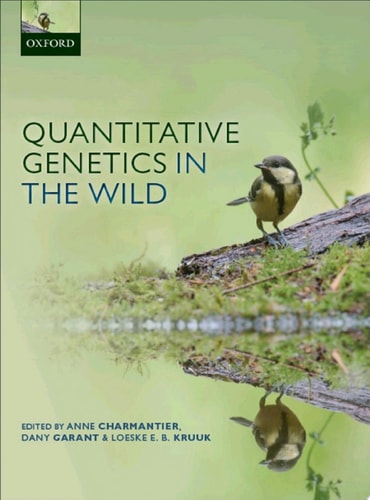
Quantitative Genetics in the Wild
0
0
As an Amazon Associate and affiliate partner, Menrva Books earns from qualifying purchases. Learn more
Author Description
Although the field of quantitative genetics - the study of the genetic basis of variation in quantitative characteristics such as body size, or reproductive success - is almost 100 years old, its application to the study of evolutionary processes in wild populations has expanded greatly over the last few decades. During this time, the use of 'wild quantitative genetics' has provided insights into a range of important questions in evolutionary ecology, ranging from studies conducting research in well-established fields such as life-history theory, behavioural ecology and sexual selection, to others addressing relatively new issues such as populations' responses to climate change or the process of senescence in natural environments. Across these fields, there is increasing appreciation of the need to quantify the genetic - rather than just the phenotypic - basis and diversity of key traits, the genetic basis of the associations between traits, and the interaction between these genetic effects and the environment. This research activity has been fuelled by methodological advances in both molecular genetics and statistics, as well as by exciting results emerging from laboratory studies of evolutionary quantitative genetics, and the increasing availability of suitable long-term datasets collected in natural populations, especially in animals. Quantitative Genetics in the Wild is the first book to synthesize the current level of knowledge in this exciting and rapidly-expanding area. This comprehensive volume also offers exciting perspectives for future studies in emerging areas, including the application of quantitative genetics to plants or arthropods, unraveling the molecular basis of variation in quantitative traits, or estimating non-additive genetic variance. Since this book deals with many fundamental questions in evolutionary ecology, it should be of interest to graduate, post-graduate students, and academics from a wide array of fields such as animal behaviour, ecology, and evolutionary biology.
Menrva's Summary
THE THESIS
This volume investigates the application of quantitative genetic methods to understand evolutionary processes within wild animal and plant populations. The authors, all established experts in evolutionary ecology, synthesize decades of research to explain how genetic variation influences phenotypic traits like body size and reproductive success. By integrating statistical modeling with molecular data, the text provides a framework for analyzing how natural environments interact with genetic effects to drive evolutionary change.
THE SCOPE MAP
What You Will Find
- Methodological advances in molecular genetics and statistical analysis for wild populations
- Applications of quantitative genetics to life-history theory, behavioral ecology, and sexual selection
- Analysis of population responses to climate change and the study of senescence
- Future research directions including plant and arthropod studies
Scope Limits
- The text focuses primarily on long-term datasets and may not cover short-term experimental designs
- It assumes a foundational understanding of basic genetics and statistical principles
THE AUTHORITY PERSPECTIVE
Experts recognize this volume as a foundational synthesis for researchers and graduate students working at the intersection of genetics and ecology. Readers frequently note the technical density of the prose, which serves as a comprehensive reference for those applying quantitative methods to natural systems.
Page Count:
302
Publication Date:
2014-01-01
Publisher:
OUP Oxford
ISBN-10:
0191655961
ISBN-13:
9780191655968
Science
Ecology
Genetics
Evolution
Biology
Evolutionary Biology
Community Tags
Similar Books







Reader Comments
Share Your Thoughts
No comments yet. Be the first to share your thoughts!