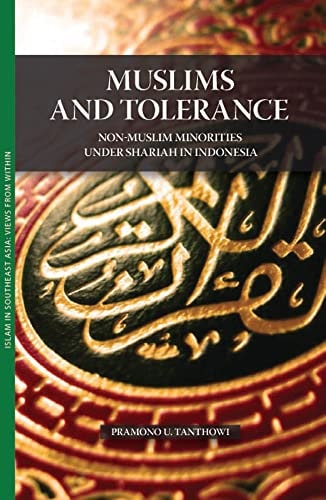
Muslims and Tolerance: Non-Muslim Minorities under Shariah in Indonesia
0
0
As an Amazon Associate and affiliate partner, Menrva Books earns from qualifying purchases. Learn more
Author Description
Indonesia's Reformasi era ushered in a new atmosphere of political openness under which groups long suppressed have resurfaced, including those that were deemed "extreme left" and "extreme right" by previous regimes. Among the ideas being discussed is the implementation of Islamic law or shariah. Pramono U. Tanthowi begins with the question, "Does Islam tolerate non-Muslim minorities?," considering it from historical, political, and religious perspectives within the Indonesian context. Although the central government has not instituted Islamic law nationally, the local government of Cianjur regency in Sunda (West Java) has implemented certain aspects of Islamic law on its own. Using Cianjur as a case study, Tanthowi surveys the views of non-Muslims on shariah as it has been applied over the last several years.
Menrva's Summary
THE THESIS
This book investigates the historical, political, and religious dimensions of Islamic law's tolerance towards non-Muslim minorities within the Indonesian context. It specifically examines the implementation of certain aspects of Shariah in the Cianjur regency of West Java, using this local government's actions as a case study to survey the perspectives of non-Muslim residents on its application.
THE SCOPE MAP
- Historical, political, and religious perspectives on Islamic tolerance towards non-Muslim minorities.
- Analysis of the Indonesian Reformasi era's impact on discussions of Islamic law.
- Case study of the Cianjur regency's implementation of specific aspects of Shariah.
- Survey of non-Muslims' views on the application of Shariah in Cianjur.
- Exploration of the central question: "Does Islam tolerate non-Muslim minorities?"
THE AUTHORITY PERSPECTIVE
The book addresses a critical question regarding religious tolerance within an Islamic legal framework, using a specific Indonesian case study. Its focus on the perspectives of non-Muslim minorities provides a nuanced view of Shariah's practical application. The research likely appeals to scholars of Islamic studies, Indonesian politics, and religious law.
Page Count:
66
Publication Date:
2008-01-01
Publisher:
Silkworm Books
ISBN-10:
9749511123
ISBN-13:
9789749511121
Non-Fiction
Politics
History
Islam
Indonesia
Sociology
Religious Law
Minority Rights
Community Tags
Similar Books