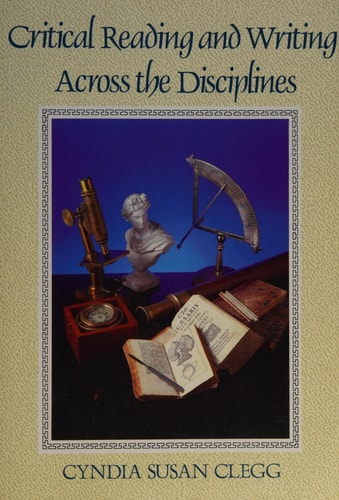
The Elements of Critical Reading
0
0
As an Amazon Associate and affiliate partner, Menrva Books earns from qualifying purchases. Learn more
Author Description
I. READING. 1. Reading Across the Disciplines. 2. Elementary Rules of Reading. Examine organizational features. Know when the text was written. Adapt to the genre. Listen to the language. Become aware of contrast. Get to the heart of the matter. Sense what may be missing. II. INTERPRETING. 3. The Need to Discuss. 4. Five Ways of Interpreting a Text. A. The social perspective. B. The emotional perspective. C. The rhetorical perspective. D. The logical perspective. E. The ethical perspective. 5. Consolidating Your Views. 6. Using Perspectives across the Disciplines. III. JUDGING. 7. The Critic's Role. 8. Judging by Values You Respect. IV. WRITING. 9. Forms of Written Response. Notes. Journals. Critical essays. 10. Guidelines for Composition. Discover what you think. Use the text for evidence. Avoid plagiarism. Quote accurately. Do not draw exaggerated conclusions. Glossary of Rhetorical Terms. APPENDICES. A. Texts for Discussion. B. Critical Responses. Useful References. Index.
Menrva's Summary
THE THESIS
This book provides a comprehensive framework for developing critical reading and writing skills across various academic disciplines. It guides readers through the process of analyzing texts by examining organizational features, historical context, genre conventions, language, and underlying assumptions. The text emphasizes the importance of interpretation through social, emotional, rhetorical, logical, and ethical perspectives, culminating in the ability to form well-reasoned judgments and articulate them effectively in written responses.
THE SCOPE MAP
- Strategies for reading across diverse academic disciplines.
- Methods for interpreting texts from multiple perspectives (social, emotional, rhetorical, logical, ethical).
- Guidance on judging texts based on established values and critical principles.
- Instruction on various forms of written response, including notes, journals, and critical essays.
- Guidelines for effective composition, focusing on developing arguments, using evidence, and avoiding plagiarism.
- A glossary of rhetorical terms.
- Appendices with sample texts for discussion and examples of critical responses.
THE AUTHORITY PERSPECTIVE
The structure of 'The Elements of Critical Reading' suggests a pedagogical approach designed for students developing analytical and argumentative skills. The detailed table of contents indicates a systematic progression from foundational reading techniques to advanced interpretive and judgmental strategies, followed by practical writing advice. This methodical organization points to a text intended for use in academic settings, likely serving as a textbook or a core resource for courses in composition, rhetoric, or literature.
Page Count:
90
Publication Date:
1991-01-01
Publisher:
Macmillan Coll Div
ISBN-10:
0023946016
ISBN-13:
9780023946011
Non-Fiction
Rhetoric
Academic writing
Critical thinking
Study Skills
Community Tags
Similar Books