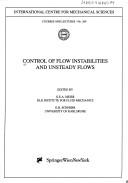
Laminar-Turbulent Transition: Symposium, Novosibirsk, USSR, July 9-13, 1984
0
0
As an Amazon Associate and affiliate partner, Menrva Books earns from qualifying purchases. Learn more
Author Description
At the suggestion of the USSR National Committee of Theo retical and Applied Mechanios the International Union of Theo retical and Applied Meohanics made a deoision to organize the Second IUTAM Symposium on Laminar-Turbulent Transition in No vosibirsk. Professor Yanenko was entrusted to be the chairman of the scientific committee. It was proposed that about 100 scientists would participate in the Symposium and that 60 lectures and invited lectures would be delivered; as for the theme of the Symposium, it was devoted to experimental and theoretical stu dies of laminar-turbulent transition in fluids and gases, i.e. the physical problems of transition and mathematical modeling in shear flows. It was planned to lay a special emphasis on fundamental mechanisms of the transition process. The scienti fio committee approved of the scope of the Symposium having considered the changes in the directions of the stUdies which took place since the First Symposium. For example, there was singled out the problem of transformation of external distur bances into eigenoscillations of shear flows, i.e. the recep tivity problem which was only slightly touched upon at the First Symposium. A new section appeared devoted to the inter relation of the flow separation phenomenon and its stability. It was planned to focus the attention on the secondary instability at transition to turbulence at the non-linear stage of the flow breakdown as well as on the loss of stability and the disturbances development in 3-D flows.
Menrva's Summary
THE THESIS
The Second IUTAM Symposium on Laminar-Turbulent Transition convened in Novosibirsk to address the fundamental mechanisms of transition in fluids and gases. The symposium focused on experimental and theoretical studies of laminar-turbulent transition in shear flows, with a particular emphasis on mathematical modeling. Key areas of discussion included the transformation of external disturbances into eigenoscillations (receptivity) and the interrelation between flow separation and stability. The proceedings also delved into secondary instability at the non-linear stage of flow breakdown and the development of disturbances in three-dimensional flows.
THE SCOPE MAP
- Experimental and theoretical studies of laminar-turbulent transition
- Mathematical modeling of transition in shear flows
- Fundamental mechanisms of the transition process
- Receptivity: transformation of external disturbances into eigenoscillations
- Interrelation of flow separation and stability
- Secondary instability at the non-linear stage of flow breakdown
- Loss of stability and disturbance development in 3-D flows
THE AUTHORITY PERSPECTIVE
This volume documents the proceedings of a specialized international symposium, indicating a focus on advanced research within fluid dynamics. The topics covered suggest a dense, technical compilation intended for specialists in the field of turbulence and flow transition. The emphasis on fundamental mechanisms and mathematical modeling points to a rigorous, analytical approach to the subject matter. The collection likely serves as a valuable reference for researchers and academics engaged in theoretical and experimental studies of fluid mechanics.
Page Count:
759
Publication Date:
1985-01-01
Publisher:
Springer-Verlag
ISBN-10:
0387152504
ISBN-13:
9780387152509
Science
Non-Fiction
Turbulence
Fluid dynamics
Symposium Proceedings
Aerodynamics
Community Tags
Similar Books