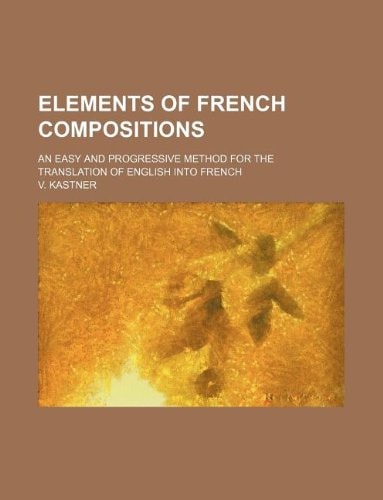
Elements of French Compositions: An Easy and Progressive Method for the Translation of English into French
0
0
As an Amazon Associate and affiliate partner, Menrva Books earns from qualifying purchases. Learn more
Author Description
This historic book may have numerous typos and missing text. Purchasers can download a free scanned copy of the original book (without typos) from the publisher. Not indexed. Not illustrated. 1891 Excerpt:... which you have begun to explain seems to me very easy to understand. 2. My sister's exercise is not so well written as usual, because she cut 177 her finger this morning. 8. How many pleasures we should have lost if Shakespeare and Moliere had never lived! 4. Noble minds always gain by being known. 5. Fatness is the criterion of female beauty in Barbary: young women are fattened there by special diet, just as English farmers fatten poultry. 6. The play you have seen acted in Paris is by Victor Hugo: it is one of the best he has ever written. 7. Except pain of body and remorse of conscience, all our evils are imaginary. 8. Virtue excepted, everything passes away like a dream. 9. I have not translated all the exercises which you had given me to do, but I have done as many as I could. LO. I send you herewith two five-pound notes; one for you, the other to cover the expenses which your master had to make for your journey. LI. We entreat you to forgive those whom you had resolved to punish. 12. Alexander the Great has destroyed more towns than he has founded.!e, f. Expliquer. Comprendre. 2. Exercice, m. D'ordinaire. Se couper au doigt. 3. Plaisir, m. Perdre. Vivre. 4. Ante, t. Gagner a. Con naitre. 5. Embonpoint, m. CrUirium, m. Female: desfemmes. Barbarie, i. Engraisser. Rigime, m. Fermier, m. Volatile, t. 6. Piece. Jouer. Ecrire. 7. Souffrance physique, i. Re mords, m. Imaginaire. 8. Vertu,i. S'evanouir. Reve,m. 9. Traduire. Exercice, m. 10. Envoyer. Billet de banque de cinq livres. Frais, m. pi. Voyage, m. 11. Supplier. Pardonner. Ri soudre de. 12. Alexandre le Grand. Di truire. Fonder. XXXVX. On Xnvariable Words. (Rules 212-226.) 1. My father went to Paris on Saturday last; he now writes that he will be back in a week or ten days. 2. A good steamer can cros...
Menrva's Summary
THE THESIS
This book presents a historical method for translating English into French, focusing on progressive exercises and grammatical principles. Originally published in 1891, it aims to guide learners through the complexities of French composition by providing a structured approach to sentence construction and vocabulary acquisition. The text includes explanations and examples intended to clarify the relationship between English and French sentence structures.
THE SCOPE MAP
- What You Will Find:
- A progressive series of translation exercises from English to French.
- Explanations of French grammar and sentence structure.
- Vocabulary lists with French terms and their English equivalents.
- Examples drawn from classic literature and everyday scenarios.
THE AUTHORITY PERSPECTIVE
This historical text offers a glimpse into 19th-century language pedagogy, providing a structured approach to French composition. The exercises are designed to build proficiency incrementally, utilizing a comparative method between English and French. While the original text may contain typographical errors, its enduring value lies in its systematic presentation of translation principles. The inclusion of literary examples suggests an aim to connect language learning with cultural appreciation.
Page Count:
66
Publication Date:
2012-03-04
Publisher:
RareBooksClub.com
ISBN-10:
1130785645
ISBN-13:
9781130785647
Non-Fiction
Educational Resources
French language
Community Tags
Similar Books


Reader Comments
Share Your Thoughts
No comments yet. Be the first to share your thoughts!