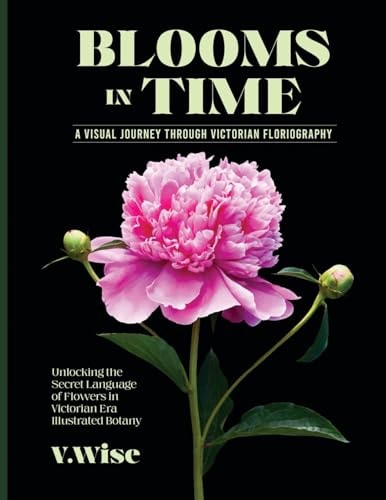
Blooms in Time: Unlocking the Secret Language of Flowers in the Victorian Era
0
0
As an Amazon Associate and affiliate partner, Menrva Books earns from qualifying purchases. Learn more
Author Description
Chrysanthemums are for condolences, rue is for regret, and rosemary is for remembrance. The Victorian language of flowers-also called floriography-emerged as a clandestinen method of communication at a time when proper etiquette discouraged open and flagrant displays of emotion. First emerging in 1819 with Charlotte de la Tour's Le langage des fleurs, this coded "language" was used widely throughout the nineteenth century in both England and America and today is synonymous with Victorian tradition and culture. Flower meanings were taken from literature, mythology, religion, medieval legend, and even the shapes of the blooms themselves. Often, florists would invent symbolism to accompany new additions to their inventory, and occasionally, flowers had different meanings depending on the location and time. Young women of high society in this era embraced the practice, sending bouquets as tokens of love or warning, wearing flowers in their hair or tucked into their gowns, and celebrating all things floral. Many of them created small arrangements of flowers, called tussie-mussies or nosegays, by combining a few blooms in a small bouquet. Worn or carried as accessories, these coded messages of affection, desire, or sorrow allowed Victorians to show their true feelings in an enigmatic and alluring display. As the era came to an end and the First World War began, the language of flowers faded in popularity. Traces of the tradition remain, however. We still use roses to convey love at weddings and on Valentine's Day, lilies for peace, and mums for condolences. The elegance and beauty of flowers have not dwindled-only our knowledge of their coded meanings. I hope this book, apart from offering a view into the history of floriography, will encourage readers to look at flowers and herbs in a new way, perhaps assigning their own meanings to the blooms that inspire them most.
Menrva's Summary
THE THESIS
This book investigates the historical development and cultural significance of floriography, the Victorian era's secret language of flowers. The author, W. Wise, explores how this coded communication system, which emerged in 1819 and flourished throughout the nineteenth century in England and America, allowed Victorians to express emotions discreetly when societal norms discouraged open displays. Drawing on literature, mythology, religion, and the natural forms of blooms, the book details how flower meanings were assigned and sometimes invented by florists, with variations depending on locale and time. It highlights the practice's embrace by young women of high society through bouquets, hair adornments, and tussie-mussies, serving as enigmatic expressions of affection, desire, or sorrow.
THE SCOPE MAP
- The origins and evolution of floriography, beginning with Charlotte de la Tour's 1819 work.
- The widespread use of the language of flowers in Victorian England and America.
- The diverse sources for flower symbolism: literature, mythology, religion, medieval legend, and bloom morphology.
- The role of florists in inventing and popularizing flower meanings.
- Regional and temporal variations in the interpretation of flower symbolism.
- The practice of creating and using tussie-mussies (nosegays) as coded messages.
- The decline of floriography with the end of the Victorian era and the onset of World War I.
- The enduring traces of the language of flowers in modern traditions, such as the use of roses for love and lilies for peace.
THE AUTHORITY PERSPECTIVE
The book offers a detailed historical and cultural exploration of floriography, tracing its rise and fall throughout the Victorian era. It highlights how this subtle form of communication was integrated into the social fabric, particularly among women of high society, through various floral arrangements and adornments. The author aims to not only illuminate the history of this practice but also to encourage readers to re-examine their relationship with flowers and perhaps assign personal meanings to them. The text suggests that while the coded knowledge has faded, the inherent beauty and symbolic potential of flowers remain.
Page Count:
218
Publication Date:
2024-01-11
Publisher:
V.Wise
ISBN-10:
1803627530
ISBN-13:
9781803627533
History
Non-Fiction
Cultural History
Botany
Social History
Victorian Era
Community Tags
Similar Books