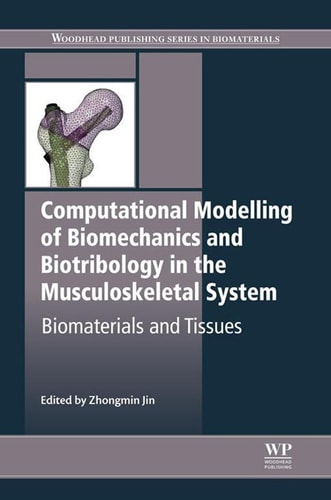
Computational Modelling of Biomechanics and Biotribology in the Musculoskeletal System: Biomaterials and Tissues
0
0
As an Amazon Associate and affiliate partner, Menrva Books earns from qualifying purchases. Learn more
Author Description
Computational Modelling of Biomechanics and Biotribology in the Musculoskeletal System reviews how a wide range of materials are modelled and how this modelling is applied. Computational modelling is increasingly important in the design and manufacture of biomedical materials, as it makes it possible to predict certain implant-tissue reactions, degradation, and wear, and allows more accurate tailoring of materials' properties for the in vivo environment. Part I introduces generic modelling of biomechanics and biotribology with a chapter on the fundamentals of computational modelling of biomechanics in the musculoskeletal system, and a further chapter on finite element modelling in the musculoskeletal system. Chapters in Part II focus on computational modelling of musculoskeletal cells and tissues, including cell mechanics, soft tissues and ligaments, muscle biomechanics, articular cartilage, bone and bone remodelling, and fracture processes in bones. Part III highlights computational modelling of orthopedic biomaterials and interfaces, including fatigue of bone cement, fracture processes in orthopedic implants, and cementless cup fixation in total hip arthroplasty (THA). Finally, chapters in Part IV discuss applications of computational modelling for joint replacements and tissue scaffolds, specifically hip implants, knee implants, and spinal implants; and computer aided design and finite element modelling of bone tissue scaffolds. This book is a comprehensive resource for professionals in the biomedical market, materials scientists and mechanical engineers, and those in academia. Covers generic modelling of cells and tissues; modelling of biomaterials and interfaces; biomechanics and biotribology Discusses applications of modelling for joint replacements and applications of computational modelling in tissue engineering
Menrva's Summary
THE THESIS
This book investigates the application of computational modeling techniques to understand the biomechanics and biotribology of the musculoskeletal system, focusing on biomaterials and tissues. It details how various materials are modeled and how these models predict implant-tissue interactions, degradation, and wear, enabling more precise tailoring of material properties for in vivo environments. The text is structured into four parts, covering fundamental modeling principles, the computational modeling of cells and tissues, the modeling of orthopedic biomaterials and interfaces, and specific applications in joint replacements and tissue scaffolds.
THE SCOPE MAP
- Fundamentals of computational modeling of biomechanics in the musculoskeletal system
- Finite element modeling applications within the musculoskeletal system
- Computational modeling of musculoskeletal cells and tissues, including cell mechanics, soft tissues, ligaments, muscle biomechanics, articular cartilage, bone, and bone remodeling
- Modeling of fracture processes in bones
- Computational modeling of orthopedic biomaterials and interfaces, such as fatigue of bone cement and fracture processes in orthopedic implants
- Analysis of cementless cup fixation in total hip arthroplasty (THA)
- Applications of computational modeling for joint replacements (hip, knee, spinal implants)
- Computer-aided design and finite element modeling of bone tissue scaffolds
THE AUTHORITY PERSPECTIVE
The book serves as a comprehensive resource for professionals in the biomedical market, materials scientists, mechanical engineers, and academics. It covers a broad spectrum of computational modeling applications, from fundamental principles to specific uses in joint replacements and tissue engineering. The detailed breakdown of topics suggests a text aimed at providing in-depth knowledge for researchers and practitioners in the field.
Page Count:
550
Publication Date:
2014-01-01
Publisher:
Elsevier S & T
ISBN-10:
0857096613
ISBN-13:
9780857096616
Science
Non-Fiction
Orthopedics
Biomechanics
Biomedical Engineering
Tissue Engineering
Community Tags
Similar Books