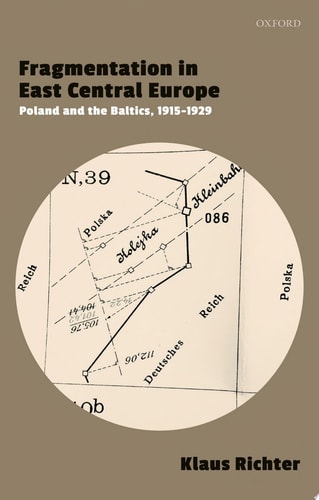
Fragmentation in East Central Europe: Poland and the Baltics, 1915-1929
0
0
As an Amazon Associate and affiliate partner, Menrva Books earns from qualifying purchases. Learn more
Author Description
Intro -- Halftitle Page -- Title Page -- Copyright Page -- Preface -- Contents -- List Of Figures And Maps -- Figures -- Maps -- Maps -- 1. Introduction -- The Fragmentation Of East Central Europe -- Historical And Historiographical Views On Fragmentation -- Territory, Economy, And Population -- 2. A Future Not As Gloomy As It Seems: Promoting Integration, Accepting Fragmentation -- German Central Europe And Russia's 'small Nationalities' -- The Regency Kingdom Of Poland -- Networks Of Mitteleuropa -- The Viability Of A Baltic-german State -- The Lost War For Integration Representing The New States -- Anti-bolshevik, Anti-german, And Anti-semitic? -- Conclusion -- 3. Who We Are, What We Do, And How Many Of Us? Repatriates, Refugees, And Citizenship -- Harnessing Displacement, Resettling The East -- Repatriation After Brest-litovsk -- Expulsion, Expropriation, And Colonization -- Minority Protection, Democracy, And Citizenship -- The League Of Nations And The Internationalization Of The Minority Question -- Conclusion -- 4. Yet Another Wire Entanglement: Borders And Territory -- 'half-faded Inscriptions': Integrating And Fragmenting East Central Europe The New Borders Of East Central Europe -- The Vilnius Region And Upper Silesia -- Hypertrophies And Hinterlands -- Fragmentation And Federation -- Conclusion -- 5. Dig Peat! Commercial Empowerment And Foreign Exploitation -- Power And Monopolies -- Colluding And Competing-british And German Trade With East Central Europe -- Foreign Capital Against National Sovereignty -- Constructing A National Merchant Class -- Private Trade With 'small States' -- Enslavement Or Immeasurable Riches: The Promises Of Transit Trade -- Conclusion 6. Awakening The Hinterland: Statism, Infrastructure, And Access To The Sea -- Monopolism And Cooperatism -- Liberalism Versus Statism -- Poland's Access To The Sea -- Lithuania's Access To The Sea -- Maritime Nations -- East Prussia: A Hinterland Without A Hinterland -- Conclusion -- 7. The Land
Menrva's Summary
THE THESIS
This work investigates how the collapse of imperial structures in East Central Europe between 1915 and 1929 necessitated a complex process of state-building amidst economic and territorial fragmentation. Klaus Richter, a historian specializing in the region, utilizes archival records and contemporary political discourse to argue that the emergence of Poland and the Baltic states was not merely a byproduct of nationalist fervor, but a result of intense negotiations regarding economic integration, minority rights, and the struggle for sovereignty against the backdrop of post-war instability.
THE SCOPE MAP
What You Will Find
- Analysis of the transition from German-occupied territories to independent nation-states.
- Examination of the League of Nations' role in minority protection and citizenship disputes.
- Evaluation of commercial policies, including transit trade, infrastructure development, and foreign capital influence.
- Case studies on the Vilnius region and Upper Silesia.
Scope Limits
- The study focuses primarily on the period ending in 1929 and does not cover the subsequent geopolitical shifts leading into the Second World War.
- The analysis is limited to the specific political and economic frameworks of Poland and the Baltic states, excluding broader comparative studies of the Balkans.
THE AUTHORITY PERSPECTIVE
Scholars in the field of East Central European history identify this text as a rigorous examination of the structural challenges faced by newly independent states in the interwar period. Readers frequently note the academic density of the prose and the author's meticulous use of primary sources to challenge traditional nationalist narratives.
Page Count:
0
Publication Date:
1900-01-01
Publisher:
Oxford University Press,
ISBN-10:
0191879371
ISBN-13:
9780191879371
History
International relations
Baltic States
20th Century
European History
Poland
Community Tags
Other Editions(2)
Similar Books

Reader Comments
Share Your Thoughts
No comments yet. Be the first to share your thoughts!