Excellence in Business Communications
0
0
As an Amazon Associate and affiliate partner, Menrva Books earns from qualifying purchases. Learn more
Author Description
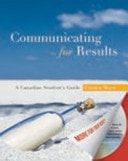
Excerpt. © Reprinted by permission. All rights reserved. Only One Text Gives Students Experience "On the Job" Each chapter opens with an exclusive feature, "On the job: FACING A COMMUNICATION DILEMMA." This slice-of-life vignette summarizes a communication problem being faced by an actual company, such as American Express, Home Depot, the U.S. Mint, Patagonia, and Dell Computer. The solution to the dilemma is found in the concepts presented in the chapter, and the featured company reappears from time to time throughout the chapter to dramatize the connection between chapter principles and life on the job. But we don't stop there. Each chapter ends with another exclusive feature, "On the job: SOLVING A COMMUNICATION DILEMMA." These simulations expand on the chapter-opening dilemma and are set within the featured company. Students are asked to solve situational problems by applying the principles discussed in the text, by making decisions about the communication process, and by selecting the best alternatives from the choices offered. Not only do these simulations give students the opportunity to practice real-world decision making, they also tie the textual information to real-life examples, providing a concrete basis for analyzing the chapter principles. This feature provides a dimension of reality unmatched by other textbooks in the field. New Features in This EditionA Greater Emphasis on Process and Product We have reorganized the material in many of the text's chapters into a series of three easy-to-follow steps: planning, writing, and completing business messages. Students will appreciate this practical strategy for solving communication problems and creating well-crafted communication products. The three-step process is explained in detail (Chapters 4-6) before it is applied to specific types of business messages: letters, memos, and e-mail messages (Chapters 7-9); reports and proposals (Chapters 10-12), and speeches and oral presentations (Chapter 13).
Menrva's Summary
THE THESIS
How can students and professionals bridge the gap between theoretical communication principles and the practical demands of the modern workplace? The authors, Courtland L. Bovee and John V. Thill, utilize their extensive experience in business education to present a structured framework for message creation. By integrating real-world corporate dilemmas with a systematic three-step process, the text argues that effective communication is a product of deliberate planning, execution, and refinement.
THE SCOPE MAP
What You Will Find
- A three-step methodology for business writing: planning, writing, and completing messages.
- Case study vignettes featuring major corporations like American Express and Patagonia.
- Interactive simulations designed to test decision-making skills in professional contexts.
- Application of principles to diverse formats including memos, reports, proposals, and oral presentations.
Scope Limits
- The text does not cover advanced interpersonal psychology or non-verbal communication theory in depth.
- It focuses primarily on standard corporate environments rather than specialized creative or technical writing fields.
THE AUTHORITY PERSPECTIVE
Experts and educators frequently cite this text as a standard resource for undergraduate business communication courses due to its practical, simulation-based approach. Readers often note the clarity of the three-step writing process as a highly effective tool for improving professional output.
Page Count:
0
Publication Date:
1993-01-01
Publisher:
McGraw-Hill Companies
ISBN-10:
0070068712
ISBN-13:
9780070068711
Business
Communications
textbook
Communication
Professional Development
Skills
Education
Community Tags
Similar Books