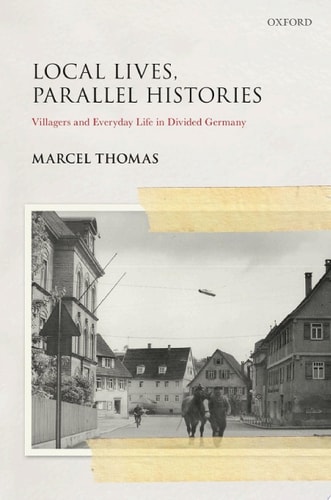
Local Lives, Parallel Histories: Villagers and Everyday Life in the Divided Germany
0
0
As an Amazon Associate and affiliate partner, Menrva Books earns from qualifying purchases. Learn more
Author Description
Intro -- Halftitle Page -- Series Page -- Title Page -- Copyright Page -- Dedication Page -- Acknowledgements -- Contents -- List Of Illustrations -- List Of Abbreviations -- Introduction: Local Lives -- A History Of Two Villages -- A Comparative History Of Life In The Divided Germany -- A Local History Of Everyday Life -- Challenging The Rural-urban Divide -- The Case Studies: Neukirch And Ebersbach -- Sources -- Chapter Outline -- 1. Modern Villagers: Rurality, Urbanity, And The Remaking Of The German Village -- Introduction Reforming The Rural: Backwardness And Modernization, 1945 To Late 1960s -- Villages Into Modern Centres: 'planning Euphoria' And High Modernism, Mid-1960s To Late 1970s -- The Return Of The Rural: Managing Crisis, Late 1970s To 1989 -- Conclusion -- 2. (un)making Community: Privacy And Communal Life In The Village -- Introduction -- Memories Of The Old Community -- Ebersbach: Unmaking Community -- Neukirch: Pragmatic Community -- Conclusion -- 3. Strangers In The Village: The Marginalization Of Newcomers In The Rural Community -- Introduction 'the First Strangers': Ethnic German Refugees After The Second World War -- Curious Presences: Foreign Workers Since The Late 1950s -- Newcomers And 'old Ebersbachers': Urban Commuters Since The 1960s -- Conclusion -- 4. The Cold War In The Village: Rural Germans, Division, And The German 'other' -- Introduction -- The Imaginary West: Longing For Consumer Affluence In Neukirch -- The Imaginary East: Perceptions Of The Gdr In Ebersbach -- Worlds Collide: German-german Encounters During The Wende -- Conclusion -- 5. Give-and-take Politics: Participation And Protest In The Village -- Introduction Socialist Activism In The Village: The Valtentalsee Resort -- Grass-roots Democracy And Local Activism_ The Youth Centre In Ebersbach -- State Crisis And Protest: The Vegetable Plots Of The Awg -- Protest And The Limits Of Local Activism_ The Illegal Crossing -- Conclusion -- 6. Beyond Nostalgia: Local History And S
Menrva's Summary
THE THESIS
This book investigates how the division of Germany between 1945 and 1989 shaped the everyday lives, social structures, and political identities of residents in rural villages. Marcel Thomas utilizes a comparative historical framework to analyze the experiences of two specific villages, Neukirch and Ebersbach, to challenge traditional urban-centric narratives of the Cold War era. By examining local archives and personal accounts, the author argues that rural communities were not passive observers of national division but active participants in navigating modernization, state policy, and social change.
THE SCOPE MAP
What You Will Find
- Comparative analysis of rural life in East and West Germany from 1945 to 1989.
- Examination of modernization efforts, communal privacy, and the integration of newcomers.
- Discussion of political participation, grassroots activism, and the impact of the Wende.
Scope Limits
- The study is restricted to the specific case studies of Neukirch and Ebersbach rather than a comprehensive national survey.
- The analysis focuses primarily on social and local history rather than high-level diplomatic or military strategy.
THE AUTHORITY PERSPECTIVE
Historians and social scientists recognize this work as a significant contribution to the study of German division, particularly for its focus on rural rather than urban experiences. Readers frequently note the academic rigor of the research and the author's success in bridging the gap between local history and broader national trends.
Page Count:
0
Publication Date:
1900-01-01
Publisher:
Oxford University Press Usa - Oso,
ISBN-10:
0191889644
ISBN-13:
9780191889646
History
Cold War
German history
Sociology
Social History
Rural Studies
Community Tags
Other Editions(2)
Similar Books
Reader Comments
Share Your Thoughts
No comments yet. Be the first to share your thoughts!