Slave in a Box: The Strange Career of Aunt Jemima
0
0
As an Amazon Associate and affiliate partner, Menrva Books earns from qualifying purchases. Learn more
Author Description
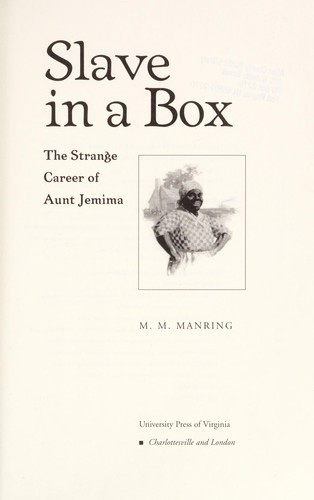
The figure of the mammy occupies a central place in the lore of the Old South and has long been used to ullustrate distinct social phenomena, including racial oppression and class identity. In the early twentieth century, the mammy became immortalized as Aunt Jemima, the spokesperson for a line of ready-mixed breakfast products. Although Aunt Jemima has undergone many makeovers over the years, she apparently has not lost her commercial appeal; her face graces more than forty food products nationwide and she still resonates in some form for millions of Americans. In Slave in a Box, M.M. Manring addresses the vexing question of why the troubling figure of Aunt Jemima has endured in American culture. Manring traces the evolution of the mammy from her roots in the Old South slave reality and mythology, through reinterpretations during Reconstruction and in minstrel shows and turn-of-the-century advertisements, to Aunt Jemima's symbolic role in the Civil Rights movement and her present incarnation as a "working grandmother." We learn how advertising entrepreneur James Webb Young, aided by celebrated illustrator N.C. Wyeth, skillfully tapped into nostalgic 1920s perceptions of the South as a culture of white leisure and black labor. Aunt Jemima's ready-mixed products offered middle-class housewives the next best thing to a black servant: a "slave in a box" that conjured up romantic images of not only the food but also the social hierarchy of the plantation South. The initial success of the Aunt Jemima brand, Manring reveals, was based on a variety of factors, from lingering attempts to reunite the country after the Civil War to marketing strategies around World War I. Her continued appeal in the late twentieth century is a more complex and disturbing phenomenon we may never fully understand. Manring suggests that by documenting Aunt Jemima's fascinating evolution, however, we can learn important lessons about our collective cultural identity.
Menrva's Summary
THE THESIS
The enduring cultural presence of the Aunt Jemima figure, rooted in the problematic imagery of the antebellum South, is examined for its complex and often disturbing appeal. M.M. Manring investigates how this iconic mammy figure, first commercialized in the early 20th century, has evolved from its origins in slave reality and mythology through various cultural reinterpretations. The book explores how advertising, particularly through the work of James Webb Young and N.C. Wyeth, capitalized on nostalgic perceptions of the South to sell products, effectively offering a
THE SCOPE MAP
- The evolution of the mammy figure from Old South slave reality and mythology.
- Reinterpretations of the mammy during Reconstruction and in minstrel shows.
- The role of Aunt Jemima in turn-of-the-century advertisements.
- Analysis of advertising entrepreneur James Webb Young and illustrator N.C. Wyeth's contributions.
- The use of nostalgic 1920s perceptions of the South in marketing.
- Aunt Jemima as a 'slave in a box' symbolizing plantation hierarchy.
- Factors contributing to the brand's initial success, including post-Civil War reconciliation and WWI marketing.
- The figure's symbolic role during the Civil Rights movement and its later incarnation as a 'working grandmother'.
THE AUTHORITY PERSPECTIVE
The book examines the enduring and complex legacy of the Aunt Jemima figure, tracing its evolution from historical roots to its commercialization and cultural impact. It highlights how advertising strategies tapped into nostalgic and problematic imagery of the South, offering a product that simultaneously evoked convenience and a specific social hierarchy. The analysis suggests that understanding this evolution provides crucial insights into American collective cultural identity. The continued resonance of the figure, even as it has undergone makeovers, points to a disturbing phenomenon that Manring seeks to illuminate through historical documentation.
Page Count:
210
Publication Date:
1998-01-01
Publisher:
Univ of Virginia Pr
ISBN-10:
0813917824
ISBN-13:
9780813917825
Non-Fiction
History
American South
Advertising history
Race Relations
Community Tags
Similar Books