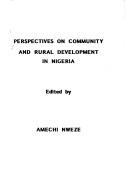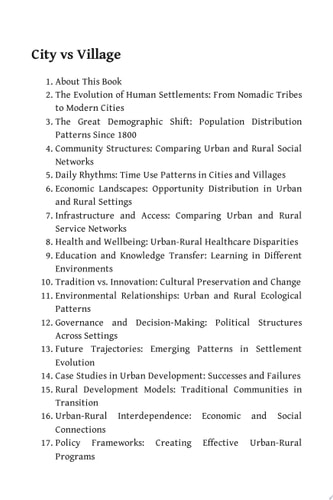
City vs Village
0
0
As an Amazon Associate and affiliate partner, Menrva Books earns from qualifying purchases. Learn more
Author Description
'City vs Village' offers a comprehensive examination of how physical environments shape human behavior, social connections, and economic opportunities across urban and rural settings. Through a blend of quantitative data and qualitative research spanning multiple continents, this groundbreaking work reveals the distinct patterns that characterize life in cities versus villages, challenging common assumptions about both environments while highlighting their unique advantages and challenges. The book progresses methodically from historical contexts to modern-day implications, beginning with the evolution of human settlements from agricultural communities to metropolises. Through extensive time-use studies across 15 countries, it uncovers fascinating contrasts in daily routines and social patterns: urban dwellers navigate complex networks with larger but less intimate social circles, while rural residents maintain stronger community bonds despite geographical isolation. This research combines census data, economic surveys, and anthropological studies to present a nuanced understanding of community dynamics. The final section translates these insights into practical applications for policy makers and community planners, offering evidence-based frameworks for developing more effective social programs and infrastructure projects. By incorporating perspectives from sociology, economics, and environmental studies, the book provides valuable tools for understanding how location-based differences influence everything from mental health to economic opportunities, making it an essential resource for anyone involved in community development or social policy planning.
Menrva's Summary
THE THESIS
This book investigates the fundamental differences in human behavior, social structures, and economic outcomes between urban and rural environments. The work synthesizes quantitative data and qualitative research from across continents to reveal distinct patterns in daily life, social connections, and opportunities. It challenges common assumptions by exploring the unique advantages and disadvantages inherent in both city and village settings, drawing on historical contexts and modern-day implications. The author's argument is built upon extensive time-use studies, census data, economic surveys, and anthropological research to provide a nuanced understanding of community dynamics.
THE SCOPE MAP
- Historical evolution of human settlements from agricultural communities to metropolises.
- Contrasts in daily routines and social patterns based on extensive time-use studies across 15 countries.
- Analysis of social networks: urban dwellers' larger but less intimate circles versus rural residents' stronger community bonds despite isolation.
- Integration of census data, economic surveys, and anthropological studies to understand community dynamics.
- Practical applications and evidence-based frameworks for policy makers and community planners.
- Examination of how location-based differences influence mental health and economic opportunities.
THE AUTHORITY PERSPECTIVE
The book is presented as a groundbreaking work that offers a comprehensive examination of how physical environments shape human behavior and social connections. Its methodical progression from historical contexts to modern-day implications, supported by extensive quantitative and qualitative research, aims to provide valuable tools for understanding location-based differences. The author's synthesis of diverse data sources and perspectives from sociology, economics, and environmental studies positions it as an essential resource for professionals in community development and social policy.
Page Count:
110
Publication Date:
2025-01-09
Publisher:
Publifye AS
ISBN-10:
8233943061
ISBN-13:
9788233943066
Non-Fiction
History
Economics
Urban Studies
Sociology
Community Development
Social policy
Rural Studies
Community Tags
Similar Books