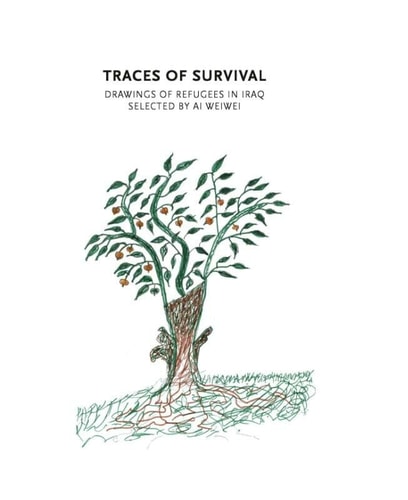
Traces of Survival: Drawings of Refugees in Iraq
0
0
As an Amazon Associate and affiliate partner, Menrva Books earns from qualifying purchases. Learn more
Author Description
Traces of Survival communicates to the world visually the tragedies that have befallen entire communities in Iraq due to the ISIS onslaught that has left over 1.8 million people internally displaced. The drawings in this book were created by the refugees in three camps in northern Iraq.Representatives from the Ruya Foundation took simple art materials to the camps - sketch books, pencils, felt tip pens, pastels, erasers and sharpeners - and invited people to tell the world about their feelings and experiences through their drawings and words. The first camp, near Dohuk, was newly built and sheltered over 4,000 Yezidi families, all refugees from Mount Sinjar. Their participation in the project seemed to be collectively therapeutic and its intensity was extremely moving. Baharka, the second camp, was home to over 8,000 families, mostly from in and around Mosul. Many elderly people were involved, who often chose poetry when images failed them. The third camp, in Ainkawa, was overpopulated and under-resourced. Situated in the grounds of a Catholic church, it housed over 135 families from the Christian village of Karakosh, outside Mosul. The drawings from each camp demonstrate the specific fears and concerns of those temporarily living there: farmers, teachers, mothers, lawyers. The project was devised as an exhibition to accompany the Iraq Pavilion at the Venice Biennale 2015, commissioned by the Ruya Foundation. It was difficult to imagine participating in Venice without giving some context to the unimaginable horrors endured by individuals, especially women and those from certain religious groups, under ISIS in Iraq. Therefore it seemed appropriate to use the visual language of art to communicate the refugees' experiences to the biennale's audience. The Ruya Foundation for Contemporary Culture believes that the simple visual language of the drawings transcends borders and national identity, so humanising the plight of victims of terrorism and violence in an accessibl
Menrva's Summary
THE THESIS
The book presents a visual testament to the profound human impact of the ISIS conflict in Iraq through the drawings of refugees. It compiles artwork created by individuals in three refugee camps near Dohuk, Baharka, and Ainkawa, offering a raw and immediate glimpse into their experiences of displacement and trauma. The project, initiated by the Ruya Foundation, provided simple art materials to refugees, inviting them to express their feelings and share their stories with the world. The drawings, created by people from diverse backgrounds including Yezidi families, those from Mosul, and Christian communities, reflect the specific fears and concerns shaped by their unique circumstances.
THE SCOPE MAP
- Drawings created by refugees in three camps in northern Iraq.
- Artwork reflecting the experiences of Yezidi families, those from Mosul, and Christian communities.
- Contributions include drawings, words, and poetry from participants.
- Explores themes of displacement, trauma, and resilience in the face of conflict.
- Contextualizes the Iraq Pavilion at the Venice Biennale 2015.
- Artwork created using sketch books, pencils, felt tip pens, pastels, erasers, and sharpeners.
THE AUTHORITY PERSPECTIVE
The book serves as a powerful visual communication of the humanitarian crisis in Iraq, stemming from the ISIS conflict and subsequent displacement of over 1.8 million people. The project, which accompanied the Iraq Pavilion at the Venice Biennale 2015, aimed to use the universal language of art to convey the refugees' experiences to a global audience. The Ruya Foundation's initiative highlights the therapeutic potential of art and its capacity to humanize victims of violence. The collection of drawings offers a poignant and accessible perspective on the plight of those affected by terrorism and conflict.
Page Count:
151
Publication Date:
2015-01-01
Publisher:
Mercatorfonds
ISBN-10:
9462300941
ISBN-13:
9789462300941
Non-Fiction
Photography
Art
Middle East
Social Issues
Contemporary Art