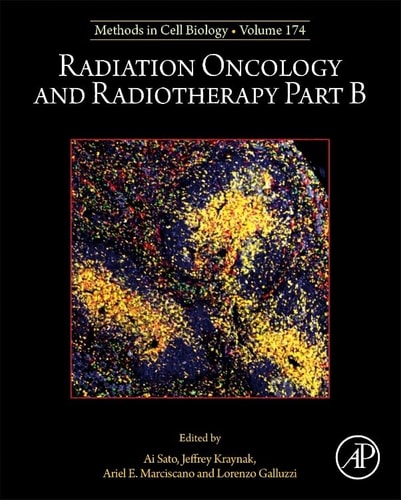
Radiation Oncology and Radiotherapy Part B
0
0
As an Amazon Associate and affiliate partner, Menrva Books earns from qualifying purchases. Learn more
Author Description
Radiation Oncology and Radiotherapy, Part B, Volume 174 in the Methods in Cell Biology series, highlights advances in the field, with this new volume presenting interesting chapters on timely topics including CT-assisted focal irradiation of tumors in mice, Methods to preserve correct dosimetry in small animal irradiators, Monitoring TGFbeta signaling in irradiated tumors, Cytofluorometric characterization of the lymphoid compartment of irradiated tumors, Cytofluorometric characterization of the myeloid compartment of irradiated tumors, Mass cytometry to characterize the immune infiltrate of irradiated tumors, Characterization of the immune infiltrate in irradiated mouse tumor by multiplex immunofluorescence, and much more. Other chapters cover Methods to study FOXP3+CD8+ cells in irradiated bone metastases, Luminex-based characterization of cytokine signaling by irradiated tumors, Explant-based assessment of anticancer immunity in irradiated tumors, Pipeline to characterize the TCR repertoire of irradiated tumors, Pipeline to identify tumor neoantigens exposed by radiation, and more.
Menrva's Summary
THE THESIS
This volume explores cutting-edge advancements in radiation oncology and radiotherapy, focusing on methodologies and analytical techniques. It details methods for precise tumor irradiation in mice, ensuring accurate dosimetry in small animal irradiators, and monitoring key biological signals like TGFbeta in irradiated tumors. The book further elaborates on characterizing the complex immune microenvironment of irradiated tumors using advanced techniques such as cytofluorometry, mass cytometry, and multiplex immunofluorescence. It also covers the analysis of specific cell populations, cytokine signaling, and the identification of tumor neoantigens exposed by radiation.
THE SCOPE MAP
- Methods for CT-assisted focal irradiation of tumors in mice
- Techniques for preserving correct dosimetry in small animal irradiators
- Monitoring TGFbeta signaling in irradiated tumors
- Cytofluorometric characterization of the lymphoid and myeloid compartments of irradiated tumors
- Mass cytometry to characterize the immune infiltrate of irradiated tumors
- Characterization of the immune infiltrate in irradiated mouse tumors by multiplex immunofluorescence
- Methods to study FOXP3+CD8+ cells in irradiated bone metastases
- Luminex-based characterization of cytokine signaling by irradiated tumors
- Explant-based assessment of anticancer immunity in irradiated tumors
- Pipelines to characterize the TCR repertoire and identify tumor neoantigens exposed by radiation
THE AUTHORITY PERSPECTIVE
As Volume 174 in the Methods in Cell Biology series, this book is positioned as a technical resource for researchers in radiation oncology and cancer biology. The detailed methodologies presented suggest it is aimed at a specialist audience seeking to replicate or advance experimental protocols. The focus on specific techniques and analytical pipelines indicates a practical, hands-on utility for laboratory scientists. Its inclusion in a well-established series implies a standard of scientific rigor and relevance to current research trends in the field.
Page Count:
176
Publication Date:
2023-01-31
Publisher:
Elsevier Science
ISBN-10:
0323899471
ISBN-13:
9780323899475
Science & Technology
Science
Non-Fiction
Oncology
Animal models
Cancer Research
Research
Medicine
Radiotherapy
Community Tags
Similar Books