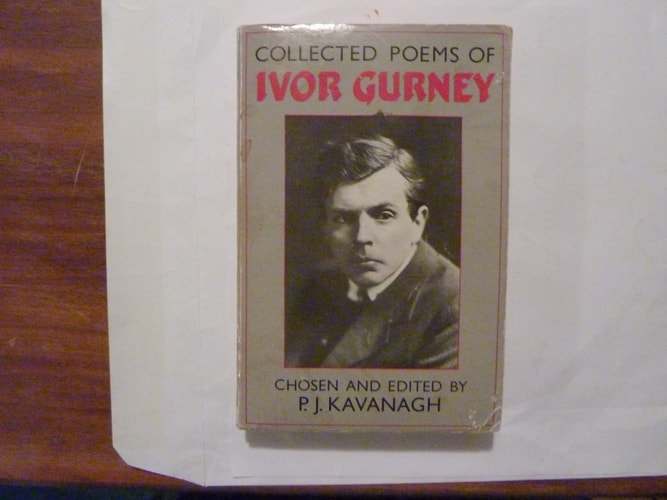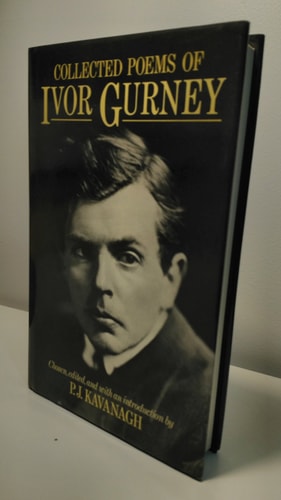
Collected Poems of Ivor Gurney
0
0
As an Amazon Associate and affiliate partner, Menrva Books earns from qualifying purchases. Learn more
Author Description
As a composer of songs, Ivor Gurney (1890-1937) has a well-established reputation, but as a poet he has been slow to take his place among the writers of the First World War, although some critics have regarded him as one of the most original and interesting poets of the early 20th century. This collection of poems, although not complete, represents the most substantial edition of gurney’s work to appear so far. It includes more than 300 poems, 117 of which have not been collected before. Two volumes of poems were published in Gurney’s lifetime (in 1917 and 1919). After the War, he continued writing, but because of his mental condition -- from 1922 until his death he was confined in institutions -- his papers were left in some confusion. Edward Blunden published a selection in 1954, and Leonard Clark a larger selection in 1973. The texts of these were taken from typescript copies made by Gurney’s friends. In 1976, however, a large collection of manuscript originals came to light, and these have enable the present editor, P. J. Kavanagh, to go in most cases behind the typescripts, a great many of which prove defective, and to publish what is often a significantly revised version of the poem so far known. The Collected Poems are preceded by a useful biographical and critical introduction by the editor, who also provides an account of the Gurney archives, with notes on the sources and texts of the chosen poems. The editor, P. J. Kavanagh, has published five volumes of his own verse, and three novels, the first of which, A Song and Dance, won the Guardian Fiction prize. He has also written two books for older children and his Selected Poems were published in 1982.
Menrva's Summary
THE PULSE
This collection captures the internal and external conflicts of a soldier-poet navigating the trauma of the First World War and subsequent institutionalization. The poems function as a record of Gurney’s objective to document the landscape of war and the fragility of the human psyche. Through a non-linear arrangement of verses, the work explores the tension between the beauty of the English countryside and the devastation of the trenches. The narrative framework relies on lyrical introspection, shifting between vivid sensory observations and the fragmented thoughts of a mind under immense pressure.
INSIDE THE PAGES
- Exploration of the psychological impact of trench warfare
- Detailed depictions of the Gloucestershire landscape
- Use of traditional and experimental verse forms
- Inclusion of previously unpublished manuscript versions
- Biographical context provided by editor P. J. Kavanagh
- Examination of the intersection between music and poetry
- Critical notes on the provenance of the original manuscripts
- Chronological and thematic organization of the poet's output
THE COLLECTIVE ECHO
Discussion often centers on Gurney’s unique position as both a composer and a poet, noting how his musical ear influences the rhythm of his verse. Readers frequently highlight the stark contrast between his early, more conventional war poems and the later, more fractured works written during his confinement. Critics emphasize the importance of this edition in correcting previous textual errors derived from faulty typescripts. The collection is widely regarded as a vital resource for understanding the depth of Gurney’s contribution to early 20th-century literature. Many readers find the editor’s introduction essential for contextualizing the poet’s difficult life and the eventual recovery of his original manuscripts.
Page Count:
284
Publication Date:
1982-01-01
Publisher:
Oxford University Press
ISBN-10:
0192119400
ISBN-13:
9780192119407
Poetry
British literature
20th Century
War poetry
Literary collections
Community Tags
Similar Books