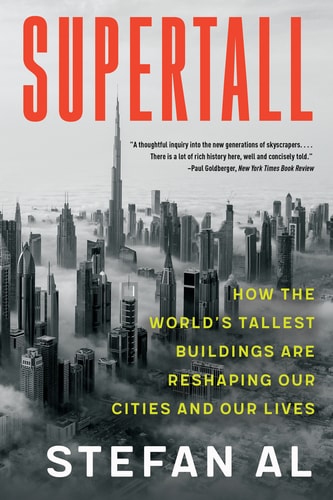
Supertall
0
0
As an Amazon Associate and affiliate partner, Menrva Books earns from qualifying purchases. Learn more
Author Description
A thoughtful inquiry into the new generations of skyscrapers…There is a lot of rich history here, well and concisely told."?Paul Goldberger, New York Times Book Review The global boom in skyscrapers—why it’s happening now, how they’re made, and what they do to cities and people. We are living in a new urban age, and its most tangible expression is the “supertall”: megastructures that are dramatically bigger, higher, and more ambitious than any in history. Cities around the world are racing to build the first mile-high building, stretching the limits of engineering and design as never before. In this fascinating work of urban history and design, TED resident Stefan Al—himself an experienced architect—explores the factors that have led to this worldwide boom. He reveals the marvelous and underappreciated feats of engineering that make today’s supertalls a reality, from double-decker elevators that silently move up to 50 miles per hour to the sophisticated blend of polymers and steel fibers that enables concrete to withstand 8,000 tons of pressure per square meter. Taking readers behind the scenes of the building and design of remarkable megastructures, both from the past (the Empire State Building, St. Paul’s Cathedral, the Eiffel Tower) and the present (Dubai’s Burj Khalifa, London’s Shard, Shanghai Tower), Al demonstrates the impact of these innovations. Yet while the supertall is undoubtedly a testament to great technological victories, it can come at an environmental and social cost. Focusing on four global cities—London, New York, Hong Kong, and Singapore—Al examines the risks of wealth inequality, carbon emissions, and contagion that stem from supertalls. And he uncovers the latest innovations in sustainable building, from skyscrapers made of wood to tree-covered buildings, that promise to yield a better urban future. Featuring more than thirty architectural drawings, Supertall is both a fascinating exploration of our greatest accomplishments and a powerful ar
Menrva's Summary
THE THESIS
The global proliferation of supertall skyscrapers represents a new era in urban development, driven by technological advancements and a desire for iconic structures. Stefan Al, an architect, investigates the current boom in megastructures, exploring the engineering marvels that enable their construction, such as high-speed elevators and advanced concrete formulations. The book examines historical and contemporary examples, including the Empire State Building and the Burj Khalifa, to demonstrate the impact of these innovations on cities and their inhabitants. However, Al also critically assesses the environmental and social costs associated with supertalls, including wealth inequality, carbon emissions, and contagion risks, while also looking towards sustainable building innovations for a better urban future.
THE SCOPE MAP
- Analysis of the factors driving the current global skyscraper boom.
- Detailed exploration of engineering feats, including double-decker elevators and advanced concrete.
- Historical case studies: Empire State Building, St. Paul’s Cathedral, Eiffel Tower.
- Contemporary case studies: Burj Khalifa, The Shard, Shanghai Tower.
- Examination of the environmental impact, focusing on carbon emissions and sustainability.
- Discussion of social implications, including wealth inequality and contagion risks.
- Focus on four global cities: London, New York, Hong Kong, and Singapore.
- Exploration of future innovations in sustainable skyscraper design, such as wooden and tree-covered buildings.
THE AUTHORITY PERSPECTIVE
The book is praised for its thoughtful inquiry into contemporary skyscrapers, with the New York Times Book Review noting its rich history, well and concisely told. It is recognized as a fascinating work of urban history and design that explores the engineering and societal impacts of these megastructures. The author's background as an architect lends authority to the examination of building and design processes. The work is seen as both an exploration of human accomplishment and a critical look at the potential downsides of supertall construction.
Page Count:
320
Publication Date:
2022-04-12
Publisher:
W. W. Norton
ISBN-10:
1324006420
ISBN-13:
9781324006428
Non-Fiction
Architecture
History
urban planning
Design
Engineering
Community Tags
Similar Books