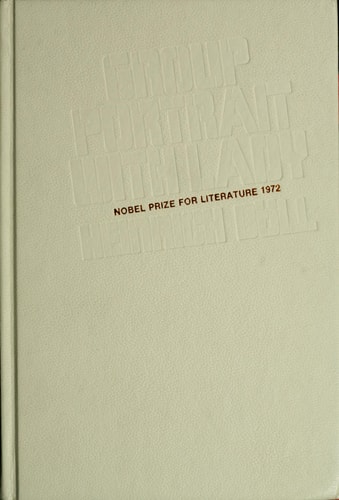
Group Portrait With Lady (English and German Edition)
0
0
As an Amazon Associate and affiliate partner, Menrva Books earns from qualifying purchases. Learn more
Author Description
The 1972 Nobel Prize-winning writer expresses his feelings about the people of war-torn Nazi Germany in this sensitive portrayal of a solitary woman's efforts to cope with the hostility of her environment
Menrva's Summary
THE PULSE
Leni Pfeiffer, a woman living in the ruins of post-war Germany, becomes the subject of an exhaustive investigation that exposes the moral decay and social pressures of her environment. Leni navigates the wreckage of Nazi Germany and the subsequent reconstruction period, attempting to maintain her personal integrity while facing intense scrutiny from a society obsessed with conformity. The narrative framework utilizes a complex, documentary-style approach, relying on the testimonies of various acquaintances to reconstruct Leni's life. These witnesses provide conflicting perspectives, forcing the reader to piece together the truth behind her solitary existence and her defiance of societal norms.
INSIDE THE PAGES
- Documentary-style narrative structure
- Multiple unreliable narrators
- Detailed social critique of post-war Germany
- Focus on individual autonomy versus state pressure
- Use of bureaucratic and investigative language
- Exploration of the intersection between private life and public history
- Non-linear timeline reconstruction
- Satirical examination of German social hierarchies
THE COLLECTIVE ECHO
Readers and critics frequently note the technical ambition of the novel, specifically its use of a fictional investigator to compile the life story of the protagonist. Discussion often centers on the effectiveness of the multi-perspective approach in highlighting the hypocrisy of the German middle class during and after the war. Many highlight the balance between the clinical, objective tone of the reports and the deeply personal, often tragic nature of Leni's experiences. The pacing is described as deliberate and methodical, requiring patience as the narrative layers accumulate to form a complete portrait. The work is widely recognized for its contribution to the understanding of individual resistance within a totalitarian framework.
Page Count:
405
Publication Date:
1973-06-01
Publisher:
McGraw-Hill
ISBN-10:
0070064237
ISBN-13:
9780070064232
Historical Fiction
German
Criticism history
Criticism & Theory
Social Commentary
Modernist
Literary
War fiction
Community Tags
Similar Books