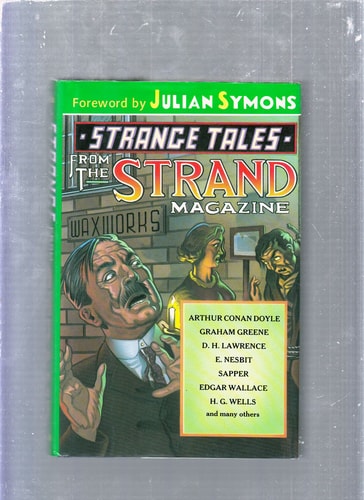
Strange Tales from the Strand Magazine
0
0
As an Amazon Associate and affiliate partner, Menrva Books earns from qualifying purchases. Learn more
Author Description
Containing twenty-nine stories of the weird and uncanny, all originally published in the Strand, this collection is an enthralling mix of horror and the supernatural, unnatural disasters, madness, and revenge. We read of a germ that turned the world blind in Edgar Wallace's "The Black Grippe." In "A Sense of the Future," the world supply of oil gives out, cars become obsolete, and after three months we have returned to the days of horse-drawn carriages. In other tales, a camera takes pictures of the future, and a 1971 newspaper is pushed through a mail slot forty years earlier. With spine-tingling stories from the likes of Sapper, Graham Greene, D.H. Lawrence, and Arthur Conan Doyle, and a comic fantasy by H.G. Wells, as well as two tales from the children's writer E. Nesbit, Strange Tales from the Strand provides a rich collection for all lovers of the macabre.
Menrva's Summary
THE PULSE
This collection presents twenty-nine tales of the uncanny and the bizarre, each originally featured in the pages of the Strand Magazine. The anthology gathers diverse narratives where protagonists confront inexplicable phenomena, ranging from global catastrophes to personal hauntings. These stories operate within the constraints of early twentieth-century realism, often introducing a single, jarring supernatural or speculative element to disrupt the mundane lives of the characters. The framework is episodic, allowing each author to explore distinct manifestations of madness, revenge, and the unknown through varied narrative voices.
INSIDE THE PAGES
- Exploration of speculative scenarios like global resource depletion and biological disasters
- Inclusion of temporal anomalies such as precognitive photography and time-displaced artifacts
- Diverse authorship featuring prominent literary figures alongside genre specialists
- Focus on the intersection of Victorian and Edwardian sensibilities with the macabre
- Atmospheric settings ranging from domestic interiors to global landscapes
- Integration of dark humor and comic fantasy elements
- Pacing that emphasizes the slow build of dread or sudden, shocking revelations
- Thematic focus on the fragility of human progress and the persistence of the irrational
THE COLLECTIVE ECHO
Discussion often centers on the historical significance of these stories as artifacts of early twentieth-century popular fiction. Readers frequently highlight the contrast between the refined prose styles of authors like Graham Greene or D.H. Lawrence and the pulp-adjacent nature of the horror themes. The collection is noted for its effective preservation of the specific atmosphere that defined the Strand Magazine during its peak. Critics often point to the variety of the selections as a primary strength, noting that the anthology avoids repetitive tropes by shifting between psychological horror and speculative science fiction. The balance between well-known literary giants and lesser-known contributors provides a comprehensive view of the era's fascination with the uncanny.
Page Count:
400
Publication Date:
1992-03-19
Publisher:
Oxford University Press
ISBN-10:
019212305X
ISBN-13:
9780192123053
Science Fiction
Horror
Classic Literature
Supernatural
Horror tales
Fantasy fiction
Anthology
Short Stories
Community Tags
Similar Books