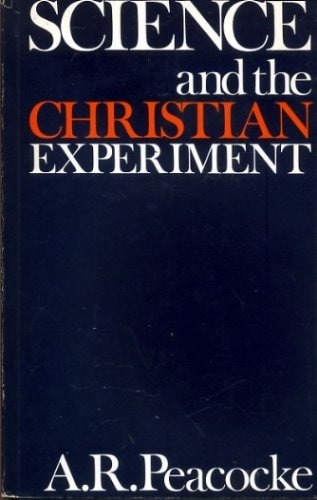
Science and the Christian experiment,
0
0
As an Amazon Associate and affiliate partner, Menrva Books earns from qualifying purchases. Learn more
Author Description
Introduction -- Chapter I. The Scientific And Theological Enterprises -- 1. Attitudes And Presuppositions -- 2. The Vision Of Unity -- 3. The Scientific And Theological Enterprises Compared -- A. Abstraction And Personal Involvement -- B. The New And The Traditional -- C. The Dynamic And The Static -- D. Authority And Intellectual Integrity -- Part I. The Scientific Perspective -- Chapter 2. From Matter To Man -- 1. The Inorganic Worl And Its Development -- 2. The Living Matter And Its Origin -- 3. From Living Matter To Man -- Chapter 3. Distinctive Features Of The Processes Of Inorganic And Biological Evolution -- 1. 'evolution -- The Cosmic Process' -- 2. Continuity -- 3. By Natural Law -- 4. Emergence And Creativity -- 5. Mechanism And Vitalism -- 6. Directions In Evolution -- 7. The Significance Of The Presence Of Man In The Universe -- 8. Conclusion -- Part Ii. The Theological Enterprise In The Perspective Of Science --^ Chapter 4. Introduction To Part Ii. The Christian Experiment -- Chapter 5. God And The Cosmos -- 1. Creation -- 2. God As Immanent And As 'holy Spirit' -- 3. Continuity, Regularity, And Vitalism -- 4. Order And Mind -- And A Cosmic Disclosure -- 5. Creation A Costly Process: Structural Relations And Pain -- Chapter 6. Man, Evolution, And Christ -- 1. Man In The Context Of Evolution -- A. Man As A Person, And Psychosomatic Unity -- B. Man Evolving: An Unfulfilled Paradox -- 2. The Christian View Of Man And His Fulfillment In Christ, As God Incarnate -- A. Man, His Sin And 'fall' -- B. The Impact Of Jesus Christ: On The Understanding Of Nature, God And Man -- C. Jesus The Christ: On The Understanding Of Nature, God And Man -- C. Jesus The Christ As 'one Person In Two Natures' -- 3. Christ And Evolution -- A. Evolution To Man: In The Light Of Jesus Christ -- B. Man, Christ And God: In The Light Of Evolution -- C. Christian Humanism D. God As Triune --^ Chapter 7. Matter In The Theological And Scientific Perspectives -- 1. The Existence Of Christia
Menrva's Summary
THE THESIS
This work investigates how the findings of modern science, particularly evolutionary biology, can be integrated into a coherent Christian theological framework. Arthur Peacocke, a biochemist and Anglican priest, utilizes his dual expertise to bridge the perceived gap between empirical scientific inquiry and religious belief. He argues that the scientific understanding of the universe as a dynamic, evolving process provides a new lens through which to interpret traditional Christian doctrines of creation, incarnation, and the nature of God. The text proposes that the 'Christian experiment' is not separate from the scientific enterprise but is a complementary way of interpreting the same reality.
THE SCOPE MAP
What You Will Find
- A detailed analysis of evolutionary processes from inorganic matter to human consciousness.
- A theological framework for understanding God as immanent within the cosmic process.
- Comparative methodology between scientific abstraction and theological personal involvement.
- Discussions on the problem of pain and structural relations in an evolving universe.
Scope Limits
- The text does not provide a comprehensive history of Christian dogma outside the context of evolutionary science.
- It does not offer a definitive resolution to all conflicts between literalist biblical interpretations and scientific data.
THE AUTHORITY PERSPECTIVE
Scholars and theologians frequently cite this work as a foundational text for the dialogue between science and religion in the late 20th century. Readers often note the academic density of the prose, which requires a strong background in both biological concepts and systematic theology to fully grasp the author's synthesis.
Page Count:
214
Publication Date:
1971-01-01
Publisher:
Oxford University Press
ISBN-10:
0192139533
ISBN-13:
9780192139535
Theology
Philosophy of
Christianity
Science and Religion
Evolutionary Biology
Community Tags
Similar Books