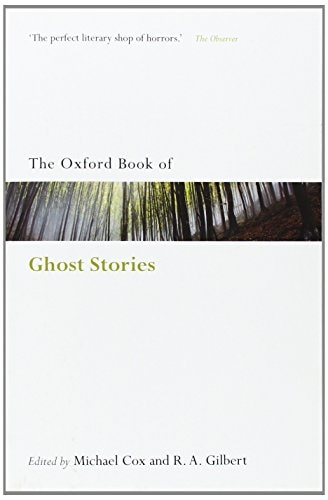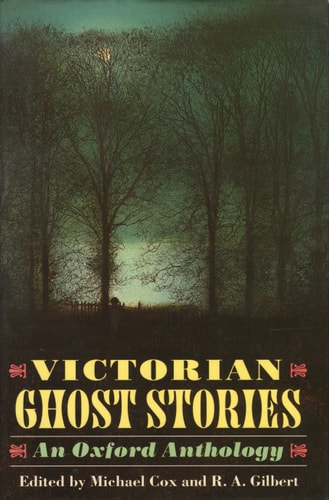
Victorian Ghost Stories: An Oxford Anthology
0
0
As an Amazon Associate and affiliate partner, Menrva Books earns from qualifying purchases. Learn more
Author Description
"I think it must have been two o'clock at least when I thought I heard a sound in that--that odious dark recess at the far end of the bedroom.... Without at first a suspicion of anything supernatural, on a sudden I saw an old man, rather stout and square, in a sort of roan-red dressing-gown, and with a black cap on his head, moving stiffly and slowly in a diagonal direction, from the recess, across the floor of the bedroom, passing my bed at the foot, and entering the lumber-closet at the left. He had something under his arm; his head hung a little at one side; and, merciful God! when I saw his face...."There's nothing like a good ghost story. And in Victorian Ghost Stories, Michael Cox and R.A. Gilbert bring together thirty-five well wrought tales of haunted houses, vengeful spirits, spectral warnings, invisible antagonists, and motiveless malignity from beyond the grave. The Victorians excelled at the ghost story, it was as much a part of their literary culture as the realistic novel, and it was practiced by almost all the great writers of the age. Cox and Gilbert here provide samples from Charles Dickens, Robert Louis Stevenson, Rudyard Kipling, Sir Arthur Conan Doyle, Henry James, and Wilkie Collins, as well as such classic ghost-story specialists as M.R. James and J.S. Le Fanu (whose "Account of Some Strange Disturbances in Aungier Street," considered one of the best haunted-house story ever written, is excerpted above), plus one or two genuine rarities for the supernatural fiction enthusiast to savor. The editors also reveal the key role played by women in the growth of the genre, including stories by Elizabeth Gaskell, Mrs. Craik, Mrs. Henry Wood, Amelia B. Edwards, Charlotte Riddell, and many others. Finally, they offer an informative introduction, detailed source notes, and an extensive survey of ghost-story collections from 1850 to 1910.Traditional in its forms, but energetically inventive and infused with a relish of the supernatural, these classic ghos
Menrva's Summary
THE PULSE
This anthology captures the unsettling intersection of Victorian domesticity and the encroaching supernatural, presenting thirty-five tales of spectral encounters and unexplained phenomena. The collection serves as a survey of the era's obsession with the uncanny, featuring protagonists who confront manifestations of guilt, vengeance, and malevolence within the confines of their own homes. The narrative framework varies across the selections, utilizing epistolary accounts, first-person recollections, and third-person omniscient perspectives to build tension. These stories operate under the logical constraints of the nineteenth-century world, where the boundaries between the rational and the irrational are frequently tested by the presence of the restless dead.
INSIDE THE PAGES
- Haunted house narratives
- Vengeful spirits and spectral warnings
- Invisible antagonists
- Motiveless malignity
- Contributions from canonical Victorian authors
- Inclusion of female writers in the genre
- Detailed source notes and historical context
- Survey of ghost-story collections from 1850 to 1910
THE COLLECTIVE ECHO
Readers and critics frequently highlight the anthology's success in showcasing the breadth of the Victorian ghost story beyond the most famous examples. Discussion often centers on the balance between the atmospheric, slow-burn dread characteristic of the period and the more direct, visceral encounters found in the shorter pieces. The inclusion of both well-known authors and lesser-known rarities provides a comprehensive view of the genre's evolution during the late nineteenth century. Many appreciate the editorial rigor provided by Cox and Gilbert, noting that the introduction and notes add significant value for those interested in the history of supernatural fiction. The collection is widely regarded as a definitive resource for understanding how the ghost story functioned as a staple of Victorian literary culture.
Page Count:
520
Publication Date:
1991-10-31
Publisher:
Oxford University Press
ISBN-10:
019214202X
ISBN-13:
9780192142023
Horror
Anthology
Gothic
Supernatural
Short Stories
Ghost Stories
Victorian
Community Tags
Similar Books