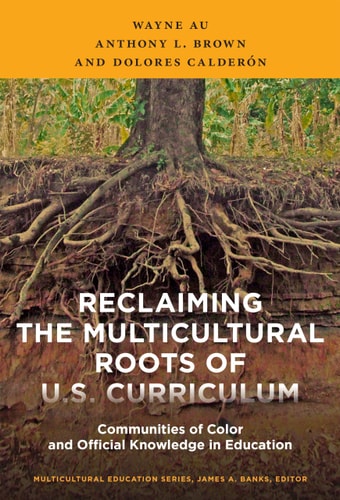
Reclaiming the Multicultural Roots of U.S. Curriculum: Communities of Color and Official Knowledge in Education
0
0
As an Amazon Associate and affiliate partner, Menrva Books earns from qualifying purchases. Learn more
Author Description
Within curriculum studies, a “master narrative” has developed into a canon that is predominantly White, male, and associated with institutions of higher education. This canon has systematically neglected communities of color, all of which were engaged in their own critical conversations about the type of education that would best benefit their children. Building upon earlier work that reviewed curriculum texts, this book serves as a much-needed correction to the glaring gaps in U.S. curriculum history. Chapters focus on the curriculum discourses of African Americans, Native Americans, Asian Americans, and Latinos during what has been construed as the “founding” period of curriculum studies, reclaiming their historical legacy and recovering the multicultural history of educational foundations in the United States. Book Features: Challenges the historical foundations of curriculum studies in the United States during the turn of and early decades of the 20th century. Illuminates the curriculum conversations, struggles, and contentions of communities of color. Highlights curriculum historically as a site at the intersection of colonization, White supremacy, and Americanization in the United States. Brings marginalized voices from the community into the conversation around curriculum, typically dominated by university voices.
Menrva's Summary
THE THESIS
This book challenges the dominant, White-centric narrative of U.S. curriculum history by recovering the educational contributions and discourses of communities of color. It argues that a canon in curriculum studies, largely shaped by White, male academics, has systematically ignored the critical conversations and struggles of African Americans, Native Americans, Asian Americans, and Latinos regarding their children's education. By examining the period often considered the founding of curriculum studies, the book aims to reclaim a more accurate and inclusive multicultural history of educational foundations in the United States.
THE SCOPE MAP
- Analysis of African American curriculum discourses and their historical legacy.
- Examination of Native American educational philosophies and practices.
- Exploration of Asian American curriculum conversations and their impact.
- Recovery of Latino educational initiatives and their role in shaping curriculum.
- Historical context of curriculum as a site of colonization, White supremacy, and Americanization.
- Emphasis on bringing marginalized community voices into academic discourse on curriculum.
THE AUTHORITY PERSPECTIVE
The book is positioned as a corrective to the established, predominantly White and male canon within curriculum studies. It aims to illuminate the often-overlooked contributions and perspectives of various communities of color during critical periods of U.S. educational history. The work highlights curriculum as a site where power dynamics, including colonization and White supremacy, have historically intersected with educational practices. By centering the voices and experiences of these marginalized groups, the book seeks to foster a more inclusive and accurate understanding of educational foundations.
Page Count:
192
Publication Date:
2016-07-22
Publisher:
Teachers College Press
ISBN-10:
0807756792
ISBN-13:
9780807756799
Non-Fiction
History
Sociology
Education
Community Tags
Similar Books