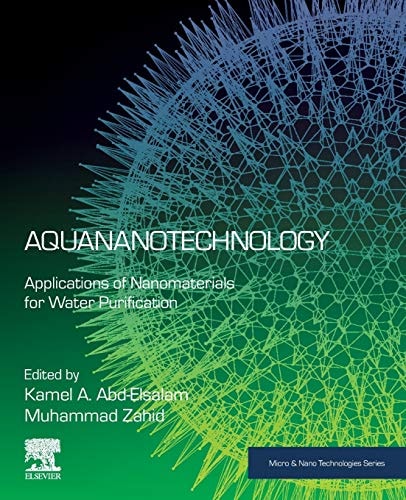
Aquananotechnology: Applications of Nanomaterials for Water Purification
0
0
As an Amazon Associate and affiliate partner, Menrva Books earns from qualifying purchases. Learn more
Author Description
Aquananotechnology: Applications of Nanomaterials for Water Purification focuses on the impacts of, and opportunities for, the application of nanotechnology to enhance water quality and the societal concerns surrounding the widespread use of nanotechnology in the water arena. Sections cover the use of nano-sensors for the detection of water pollutants, the control of waterborne pathogens, and the use of nano-biochar coal fly composites for phytoremdtions wastewater pollutants. In addition, the book explores the uses of nanoadsorbents for heavy metals, dyes, Arsenic, pesticides, and water/wastewater remediation and decontamination of water from xenobiotics, bionanocomposites, metal oxides, silver, zinc nanoparticles, and carbon-based nanomaterials for wastewater treatment. In addition, the book covers the use of zerovalent iron nanomaterials and nanostructured mesoporous silica for water purification, along with nano-hydrogels to increase water efficiency and conservation. Finally, the socioeconomic impacts and risks of aquananotechnology in ecosystems are discussed. This book provides a detailed description of the ecological applications of nanomaterials in aquatic environments, offering a cogent analysis of both major applications and challenges.
Menrva's Summary
THE THESIS
This book investigates the multifaceted applications of aquananotechnology in addressing global water quality challenges. It details the use of nanomaterials for detecting pollutants, controlling pathogens, and remediating wastewater, exploring specific applications such as nano-sensors, nano-biochar, and nanoadsorbents for heavy metals, dyes, and pesticides. The work also examines the purification capabilities of nanostructured materials like zerovalent iron, mesoporous silica, and nano-hydrogels, while critically assessing the socioeconomic impacts and ecological risks associated with widespread aquananotechnology adoption.
THE SCOPE MAP
- Applications of nano-sensors for water pollutant detection.
- Control of waterborne pathogens using nanotechnology.
- Use of nano-biochar coal fly composites for phytoremediation of wastewater pollutants.
- Nanoadsorbents for heavy metals, dyes, Arsenic, and pesticides remediation.
- Wastewater treatment using bionanocomposites, metal oxides, silver, zinc nanoparticles, and carbon-based nanomaterials.
- Purification of water using zerovalent iron nanomaterials and nanostructured mesoporous silica.
- Application of nano-hydrogels for water efficiency and conservation.
- Discussion of socioeconomic impacts and risks of aquananotechnology in ecosystems.
THE AUTHORITY PERSPECTIVE
The book provides a comprehensive overview of aquananotechnology, detailing its potential for enhancing water quality and addressing environmental concerns. It covers a wide array of applications, from pollutant detection and pathogen control to advanced remediation techniques using various nanomaterials. The inclusion of socioeconomic impacts and ecological risks offers a balanced perspective on the technology's broader implications. The work is positioned as a detailed analysis of both the major applications and the challenges inherent in the field of aquananotechnology.
Page Count:
626
Publication Date:
2020-12-04
Publisher:
Elsevier Science
ISBN-10:
0128211415
ISBN-13:
9780128211410
Science
Non-Fiction
Chemical Engineering
Water purification
Community Tags
Similar Books