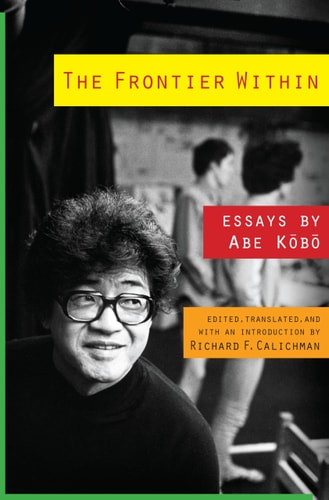
The Frontier Within: Essays by Abe Kōbō
0
0
As an Amazon Associate and affiliate partner, Menrva Books earns from qualifying purchases. Learn more
Author Description
Abe Kobo (1924-1993) was one of Japan's greatest postwar writers, widely recognized for his imaginative science fiction and plays of the absurd. However, he also wrote theoretical criticism for which he is lesser known, merging literary, historical, and philosophical perspectives into keen reflections on the nature of creativity, the evolution of the human species, and an impressive range of other subjects. Abe Kobo tackled contemporary social issues and literary theory with the depth and facility of a visionary thinker. Featuring twelve essays from his prolific career--including "Poetry and Poets (Consciousness and the Unconscious)," written in 1944, and "The Frontier Within, Part II," written in 1969--this anthology introduces English-speaking readers to Abe Kobo as critic and intellectual for the first time. Demonstrating the importance of his theoretical work to a broader understanding of his fiction--and a richer portrait of Japan's postwar imagination--Richard F. Calichman provides an incisive introduction to Abe Kobo's achievements and situates his essays historically and intellectually.
Menrva's Summary
THE THESIS
This collection explores the multifaceted nature of creativity, human evolution, and contemporary societal issues through the lens of literary and philosophical criticism. Abe Kōbō, renowned for his imaginative fiction, also produced incisive theoretical essays that merge literary, historical, and philosophical perspectives. This anthology, featuring twelve essays spanning from 1944 to 1969, introduces English-speaking readers to his critical and intellectual contributions for the first time. The essays demonstrate the importance of his theoretical work to a broader understanding of his fiction and offer a richer portrait of Japan's postwar imagination.
THE SCOPE MAP
- Twelve essays by Abe Kōbō, a prominent postwar Japanese writer.
- Critical reflections on the nature of creativity and the evolution of the human species.
- Discussions merging literary, historical, and philosophical perspectives.
- Analysis of contemporary social issues and literary theory.
- Essays include "Poetry and Poets (Consciousness and the Unconscious)" (1944) and "The Frontier Within, Part II" (1969).
- An incisive introduction by Richard F. Calichman situating Abe Kōbō's work historically and intellectually.
THE AUTHORITY PERSPECTIVE
This collection is presented as a crucial introduction to Abe Kōbō's lesser-known critical and intellectual contributions for an English-speaking audience. The publisher's description emphasizes the significance of these essays in providing a richer understanding of his celebrated fiction and Japan's postwar imagination. The inclusion of essays from different periods of his career suggests a comprehensive overview of his thought. The framing by Richard F. Calichman aims to situate his theoretical work within its historical and intellectual context, highlighting his depth as a thinker.
Page Count:
191
Publication Date:
2013-01-01
Publisher:
Columbia University Press
ISBN-10:
0231163878
ISBN-13:
9780231163873
Non-Fiction
Creativity
Essays
Literary Criticism
Literary theory
Community Tags
Similar Books