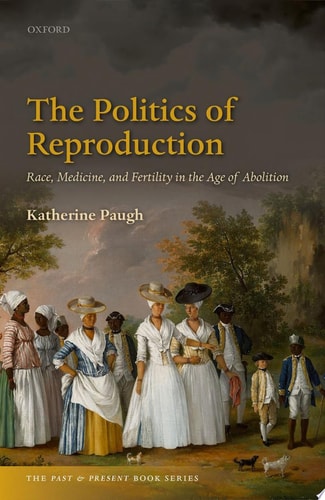
Politics of Reproduction: Race, Medicine, and Fertility in the Age of Abolition
0
0
As an Amazon Associate and affiliate partner, Menrva Books earns from qualifying purchases. Learn more
Author Description
Many British Politicians, Planters, And Doctors Attempted To Exploit The Fertility Of Afro-caribbean Women's Bodies In Order To Ensure The Economic Success Of The British Empire During The Age Of Abolition. Abolitionist Reformers Hoped That A Homegrown Labor Force Would End The Need For The Atlantic Slave Trade. By Establishing The Ubiquity Of Visions Of Fertility And Subsequent Economic Growth During This Time, The Politics Of Reproduction Sheds Fresh Light On The Oft-debated Question Of Whether Abolitionism Was Understood By Contemporaries As Economically Beneficial To The Plantation Colonies. At The Same Time, Katherine Paugh Makes Novel Assertions About The Importance Of Britain's Caribbean Colonies In The Emergence Of Population As A Political Problem. The Need To Manipulate The Labor Market On Caribbean Plantations Led To The Creation Of New Governmental Strategies For Managing Sex And Childbearing, Such As Centralized Nurseries, Discouragement Of Extended Breastfeeding, And Financial Incentives For Childbearing, That Have Become Commonplace In Our Modern World. While Assessing The Politics Of Reproduction In The British Empire And Its Caribbean Colonies In Relationship To Major Political Events Such As The Haitian Revolution, The Study Also Focuses In On The Island Of Barbados. The Remarkable Story Of An Enslaved Midwife And Her Family Illustrates How Plantation Management Policies Designed To Promote Fertility Affected Afro-caribbean Women During The Late Eighteenth And Early Nineteenth Centuries. The Politics Of Reproduction Draws On A Wide Variety Of Sources, Including Debates In The British Parliament And The Barbados House Of Assembly, The Records Of Barbadian Plantations, Tracts About Plantation Management Published By Doctors And Plantation Owners, And Missionary Records Related To The Island Of Barbados.
Menrva's Summary
THE THESIS
This book investigates how the management of Afro-Caribbean women's fertility became a central political and economic strategy for the British Empire during the transition from the Atlantic slave trade to abolition. Katherine Paugh, a historian specializing in the British Atlantic world, utilizes a diverse array of archival materials—including parliamentary debates, plantation records, and medical tracts—to argue that the regulation of reproduction was a foundational element in the development of modern population management. By focusing on the intersection of race, medicine, and labor, Paugh demonstrates how plantation-era policies regarding childbearing and infant care were precursors to contemporary governmental strategies.
THE SCOPE MAP
What You Will Find
- Analysis of British colonial policy in the Caribbean, with a specific focus on Barbados.
- Examination of the economic motivations behind the promotion of enslaved women's fertility.
- Historical documentation of plantation management techniques, including centralized nurseries and breastfeeding regulations.
- A micro-historical study of an enslaved midwife and her family to illustrate the impact of these policies.
Scope Limits
- The study is primarily focused on the British Caribbean and does not provide an exhaustive comparative analysis of other colonial empires.
- The narrative centers on the late eighteenth and early nineteenth centuries, excluding later developments in the post-emancipation era.
THE AUTHORITY PERSPECTIVE
Scholars in the fields of Atlantic history and gender studies recognize this work as a significant contribution to understanding the intersection of reproductive politics and colonial labor systems. Readers frequently note the meticulous archival research and the clarity with which Paugh connects historical plantation management to modern governmental practices.
Page Count:
304
Publication Date:
2017-01-01
Publisher:
Oxford University Press
ISBN-10:
0192506986
ISBN-13:
9780192506986
History
Women black
Gender Studies
MEDICAL History
Slavery
Great Britain
Caribbean History
British Empire
Caribbean Area
Reproductive health
Community Tags
Similar Books