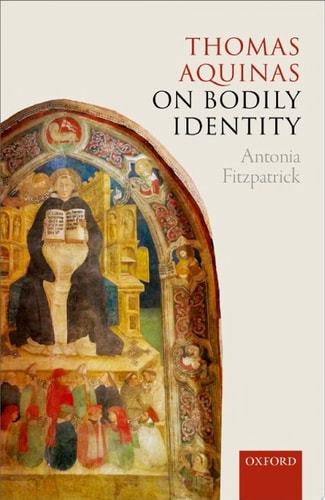
Thomas Aquinas on Bodily Identity
0
0
As an Amazon Associate and affiliate partner, Menrva Books earns from qualifying purchases. Learn more
Author Description
This is a study of the union of matter and the soul in the human being in the thought of the Dominican Thomas Aquinas. At first glance this issue might appear arcane, but it was at the centre of polemic with heresy in the thirteenth century and at the centre of the development of medieval thought more broadly. The book argues that theological issues, especially the need for an identical body to be resurrected at the end of time, but also considerations about Christ's crucifixion and saints' relics, were central to Aquinas's account of how human beings are constituted. The book explores in particular how theological questions and concerns shaped Aquinas's thought on individuality and personal and bodily identity over time, his embryology and understanding of heredity, his work on nutrition and bodily growth, and his fundamental conception of matter itself. It demonstrates, up-close, how Aquinas used his peripatetic sources, Aristotle and (especially) Averroes, to frame and further his own thinking in these areas. The book also indicates how Aquinas's thought on bodily identity became pivotal to university debates and relations between the rival mendicant orders in the late thirteenth and early fourteenth centuries, and that quarrels surrounding these issues persisted into the fifteenth century. Not only is this a study of the interface between theology, biology, and physics in Aquinas's mind; it also fundamentally revises the view of Aquinas that is generally accepted. Aquinas is famous for holding that the one and only substantial (or nature-determining) form in a human being is the soul, and most scholars have therefore thought that he located the identity of the individual in their soul. This book restores the body through a thorough and critical examination of the range of Aquinas's works.
Menrva's Summary
THE THESIS
This book investigates how theological imperatives regarding resurrection and bodily integrity shaped Thomas Aquinas's philosophical account of human identity and the union of matter and soul. Antonia Fitzpatrick, a scholar of medieval thought, challenges the prevailing academic consensus that Aquinas located individual identity exclusively within the soul. By analyzing Aquinas's engagement with Aristotelian and Averroist sources, the author argues that material considerations—such as nutrition, embryology, and the physical nature of relics—were foundational to his metaphysical framework.
THE SCOPE MAP
What You Will Find
- Analysis of Aquinas's integration of Aristotelian physics and biology with Christian theology.
- Examination of medieval debates regarding resurrection, Christ's crucifixion, and the veneration of relics.
- Investigation into Aquinas's theories on heredity, growth, and the constitution of matter.
- Historical context regarding the influence of these ideas on mendicant order rivalries and university discourse.
Scope Limits
- The study focuses primarily on the thirteenth and fourteenth centuries, with limited discussion of post-fifteenth-century developments.
- The text assumes a foundational knowledge of scholastic terminology and Aristotelian metaphysics.
THE AUTHORITY PERSPECTIVE
Scholars recognize this work as a significant revisionist study that forces a re-evaluation of the standard interpretation of Thomistic hylomorphism. Readers frequently note the academic density of the prose and the author's meticulous use of primary sources to support her central argument.
Page Count:
213
Publication Date:
2017-01-01
Publisher:
OUP Oxford
ISBN-10:
0192508245
ISBN-13:
9780192508249
Philosophy
History of Ideas
Thomas Aquinas
Theology
Metaphysics
History & Surveys
Community Tags
Other Editions(3)
Similar Books

Reader Comments
Share Your Thoughts
No comments yet. Be the first to share your thoughts!