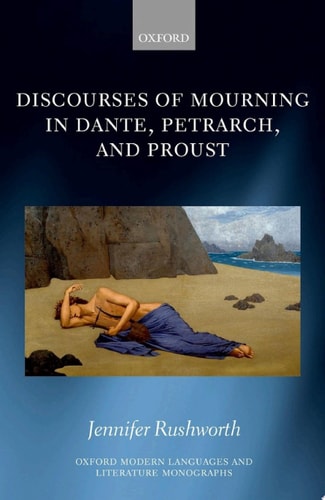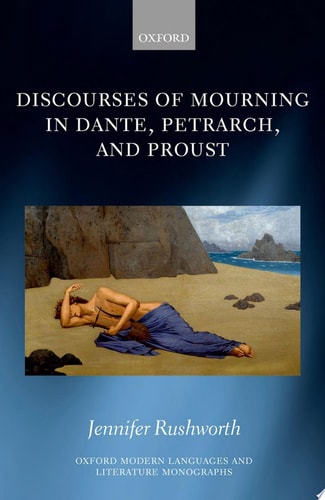
Discourses of Mourning in Dante, Petrarch, and Proust
0
0
As an Amazon Associate and affiliate partner, Menrva Books earns from qualifying purchases. Learn more
Author Description
This book brings together, in a novel and exciting combination, three authors who have written movingly about mourning: two medieval Italian poets, Dante Alighieri and Francesco Petrarca, and one early twentieth-century French novelist, Marcel Proust. Each of these authors, through their respective narratives of bereavement, grapples with the challenge of how to write adequately about the deeply personal and painful experience of grief. In Jennifer Rushworth's analysis, discourses of mourning emerge as caught between the twin, conflicting demands of a comforting, readable, shared generality and a silent, solitary respect for the uniqueness of any and every experience of loss. Rushworth explores a variety of major questions in the book, including: What type of language is appropriate to mourning? What effect does mourning have on language? Why and how has the Orpheus myth been so influential on discourses of mourning across different time periods and languages? Might the form of mourning described in a text and the form of closure achieved by that same text be mutually formative and sustaining? In this way, discussion of the literary representation of mourning extends to embrace topics such as the medieval sin of acedia, the proper name, memory, literary epiphanies, the image of the book, and the concept of writing as promise. In addition to the three primary authors, Rushworth draws extensively on the writings of Sigmund Freud, Julia Kristeva, Jacques Derrida, and Roland Barthes. These rich and diverse psychoanalytical and French theoretical traditions provide terminological nuance and frameworks for comparison, particularly in relation to the complex term melancholia.
Menrva's Summary
THE THESIS
This book investigates the intersection of literary language and the experience of grief by examining how Dante, Petrarch, and Proust navigate the tension between shared cultural expressions of loss and the solitary nature of bereavement. Jennifer Rushworth, a scholar of comparative literature, utilizes a framework grounded in both close textual analysis and psychoanalytic theory. She argues that the act of writing about mourning forces authors to reconcile the desire for communicative clarity with the inherent silence required to respect the uniqueness of personal loss.
THE SCOPE MAP
What You Will Find
- Comparative analysis of Dante Alighieri, Francesco Petrarca, and Marcel Proust.
- Theoretical application of works by Sigmund Freud, Julia Kristeva, Jacques Derrida, and Roland Barthes.
- Exploration of the Orpheus myth as a recurring archetype in mourning literature.
- Examination of thematic concepts including acedia, memory, and the function of the proper name.
Scope Limits
- The study does not provide a comprehensive history of mourning rituals across all cultures.
- It does not offer a clinical or therapeutic guide for processing grief outside of literary contexts.
THE AUTHORITY PERSPECTIVE
Scholars recognize this work as a sophisticated contribution to the field of comparative literature and affect studies. Readers frequently note the academic density of the prose, which requires familiarity with both the primary literary texts and the referenced psychoanalytic traditions.
Page Count:
224
Publication Date:
2016-01-01
Publisher:
Oxford University Press
ISBN-10:
0192508288
ISBN-13:
9780192508287
Philosophy
Comparative
Literary Criticism
Psychoanalysis
Medieval
Modernist
Grief Studies