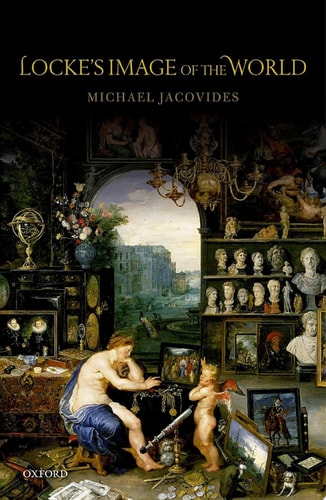
Locke's Image of the World
0
0
As an Amazon Associate and affiliate partner, Menrva Books earns from qualifying purchases. Learn more
Author Description
Modern philosophy originates during the scientific revolution, and Michael Jacovides provides an engaging account of how this scientific background influences one of the foremost figures of early modern philosophy, John Locke. With this guiding thread, Jacovides gives clear and accurate answers to some of the central questions surrounding Locke's Essay Concerning Human Understanding. Why does he say that we have an obscure idea of substance? Why does he think that we perceive a two-dimensional array of color patches? Why does he think that matter can't naturally think? Why does he analyze secondary qualities as powers to produce ideas in us? Jacovides' method also allows him to trace the effects of Locke's scientific outlook on his descriptions of the way things appear to him and on his descriptions of the boundaries of conceivability. By placing Locke's thought in its scientific, religious, and anti-scholastic contexts, Jacovides explains not only what Locke believes but also why he believes it, and he thereby uncovers reveals the extra-philosophical sources of some of the central aspects of Locke's philosophy.
Menrva's Summary
THE THESIS
How does the scientific revolution of the seventeenth century shape the foundational philosophical arguments presented in John Locke's Essay Concerning Human Understanding? Michael Jacovides examines the intellectual environment of the early modern period to determine the external influences on Locke's metaphysical and epistemological claims. By situating Locke within the specific scientific, religious, and anti-scholastic frameworks of his time, the author argues that many of Locke's most debated positions are direct responses to the scientific developments of the era. The text systematically addresses the origins of Locke's views on substance, perception, and the nature of matter.
THE SCOPE MAP
What You Will Find
- Analysis of the scientific revolution's impact on early modern philosophical inquiry.
- Examination of Locke's specific claims regarding secondary qualities and the perception of color.
- Investigation into the boundaries of conceivability and the nature of substance.
- Contextualization of Locke's work within anti-scholastic and religious traditions.
Scope Limits
- The text focuses primarily on the scientific and historical context rather than a comprehensive critique of Locke's political philosophy.
- It does not provide a general biography of Locke, focusing instead on the specific intellectual influences on his major philosophical treatise.
THE AUTHORITY PERSPECTIVE
Scholars and students of early modern philosophy frequently cite this work for its ability to clarify complex passages in the Essay Concerning Human Understanding by grounding them in historical scientific context. Experts note that the prose is accessible while maintaining the rigor required for academic study of Locke's metaphysical commitments.
Page Count:
255
Publication Date:
2016-01-01
Publisher:
OUP Oxford
ISBN-10:
019250715X
ISBN-13:
9780192507150
Philosophy
Pragmatism
Early Modern
John Locke
Epistemology
Science History
Philosophy history
Community Tags
Other Editions(3)

Similar Books