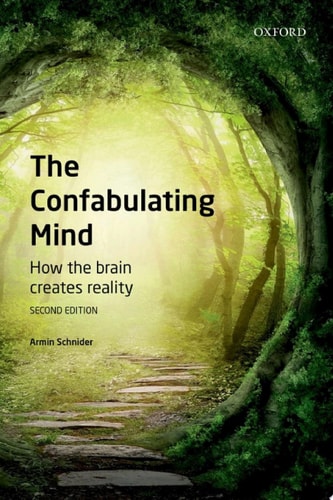
The Confabulating Mind: How the Brain Creates Reality
0
0
As an Amazon Associate and affiliate partner, Menrva Books earns from qualifying purchases. Learn more
Author Description
Confabulations are recitations of events and experiences that never happened, ranging from incorrect responses to questions to a blatant confusion of reality. The Confabulating Mind provides the most up-to-date account of the causes, anatomical basis, and mechanisms of the phenomenon of false memories. In this significant update on the first edition, the author analyses new and diverse examples of striking clinical cases, discusses children's sense of reality, and incorporates his research on a distinct form of confabulation that is characterized by a confusion of reality. The book also examines other forms such as déjà-vu, paramnesic misidentification, and anosognosia; looks at false memories as they occur in healthy people; and considers how the brain uses orbitofrontal reality filtering to create reality. By re-tracing the history of confabulations and integrating the latest insights into the mechanisms of confabulations, it summarises current interpretations of confabulations before making recommendations for future study. This book is important reading for neurologists, psychiatrists, neuropsychologists, cognitive neuroscientists, and other scientists and clinicians interested in the organization of memory and thought.
Menrva's Summary
THE THESIS
How does the human brain distinguish between actual experiences and fabricated memories, and what happens when this reality-filtering mechanism fails? Armin Schnider, a professor of neurology, synthesizes clinical case studies and neuroanatomical research to explain the phenomenon of confabulation. He argues that the orbitofrontal cortex acts as a critical filter that prevents outdated or irrelevant memories from being mistaken for current reality, providing a framework for understanding both pathological and healthy memory errors.
THE SCOPE MAP
What You Will Find
- Analysis of clinical cases involving false memories and reality confusion
- Examination of orbitofrontal reality filtering mechanisms
- Discussion of related phenomena including déjà-vu, paramnesic misidentification, and anosognosia
- Historical overview of confabulation research and future study recommendations
Scope Limits
- The text focuses primarily on neurological and neuropsychological mechanisms rather than purely philosophical or sociological interpretations of memory.
THE AUTHORITY PERSPECTIVE
Experts and clinicians recognize this work as a comprehensive resource for understanding the neuroanatomical basis of memory errors. Readers frequently note the academic density of the prose, making it most suitable for professionals and students in the fields of neurology and cognitive science.
Page Count:
324
Publication Date:
2017-01-01
Publisher:
OUP Oxford
ISBN-10:
0192506838
ISBN-13:
9780192506832
Non-Fiction
Psychology
Memory
Medical
Allied Health
Neuroscience
Repression Psychology
Neurology