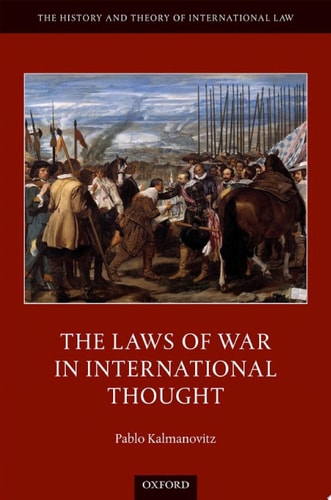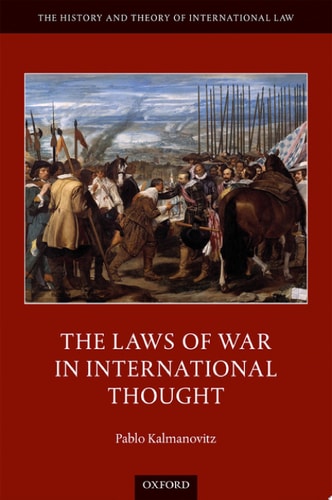
The Laws of War in International Thought
0
0
As an Amazon Associate and affiliate partner, Menrva Books earns from qualifying purchases. Learn more
Author Description
The Law Of Armed Conflict Is Usually Understood To Be A Regime Of Exception That Applies Only During Armed Conflict And Regulates Hostilities Among Enemies. It Assigns Privileges To States Far Beyond What They Are Allowed To Do In Peacetime, And It Mandates Certain Protections For Non-combatants, Which Can Often Be Defeated By Appeals To Military Necessity Or Advantage. The Laws Of War In International Thought Examines The Intellectual History Of The Laws Of War Before Their Codification. It Reconstructs The Processes By Which Political And Legal Theorists Built The Laws' Distinctive Vocabularies And Legitimized Some Of Their Broadest Permissions, And It Situates These Processes Within The Broader Intellectual Project That From Early Modernity Spelled Out The Nature, Function, And Powers Of State Sovereignty. The Book Focuses On Four Historical Moments In The Intellectual History Of The Laws Of War: The Doctrine Of Just War In Spanish Scholasticism; Hugo Grotius's Theory Of Solemn War; The Enlightenment Theory Of Regular War; And Late Nineteenth-century Humanitarianism. By Looking At These Moments, Pablo Kalmanovitz Shows How Challenging And Polemical It Has Been For International Theorists To Justify The Exceptional And Permissive Character Of The Laws Of War. In This Way, He Contributes To Recover A Sense Of The Historical Foundations And Many Still Problematic Aspects Of The Law Of Armed Conflict.
Menrva's Summary
THE THESIS
This book investigates the intellectual origins and historical justifications for the laws of war, specifically examining how legal theorists reconciled the exceptional permissions granted to states during conflict with broader concepts of sovereignty.
Pablo Kalmanovitz, a scholar of political theory and international law, utilizes a historical reconstruction of legal thought to analyze how the vocabulary of armed conflict was constructed. He argues that the laws of war were not merely neutral rules but were deeply embedded in the evolving project of defining state power from early modernity onward. By tracing these developments, the author highlights the persistent tension between humanitarian protections and the strategic necessities of sovereign states.
THE SCOPE MAP
What You Will Find
- Analysis of the Spanish Scholastic doctrine of just war
- Examination of Hugo Grotius's theory of solemn war
- Investigation into Enlightenment theories of regular war
- Review of late nineteenth-century humanitarianism
- A framework connecting legal theory to the development of state sovereignty
Scope Limits
- The book does not provide a comprehensive legal handbook for contemporary military operations
- It does not focus on the post-1945 international legal order or modern treaty law
THE AUTHORITY PERSPECTIVE
Scholars and legal historians recognize this work as a rigorous contribution to the intellectual history of international law. Readers frequently note the academic density of the prose, which is best suited for those with a background in political theory or legal studies.
Page Count:
176
Publication Date:
2020-01-01
Publisher:
Oxford University Press
ISBN-10:
0192507400
ISBN-13:
9780192507402
International Law
Sovereignty
Legal History
War Studies
Political Philosophy