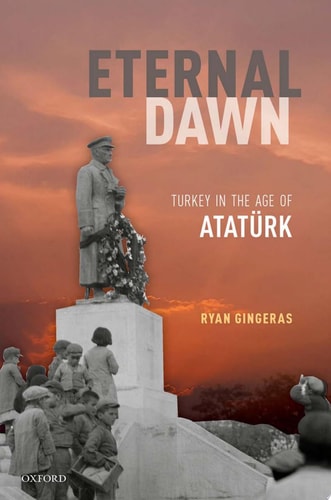
Eternal Dawn: Turkey in the Age of Atatürk
0
0
As an Amazon Associate and affiliate partner, Menrva Books earns from qualifying purchases. Learn more
Author Description
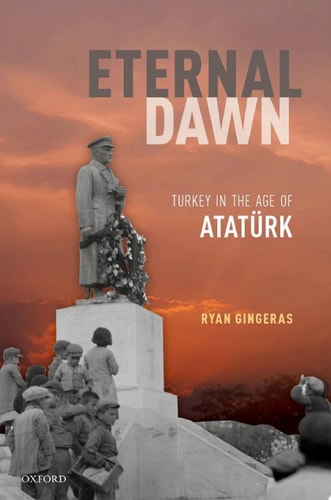
Amid the tensions and uncertainties that plagued the globe before the Second World War, the Republic of Turkey appeared to many as a unique and constructive model for how a state was to be reformed and governed in the modern era. For many interwar observers, Turkey was a country that seemed to have radically transformed itself into a nation that was united, strong, and progressive, one that was unburdened by its past. A general consensus held that Turkey's founding president, Mustafa Kemal Atatürk, was the chief architect and engineer of this feat, a belief that placed him among the greatest reforming statesmen in world history. This general perception of Atatürk and his revolutionary rule has largely endured to this day. As a study grounded in largely untapped archival and scholarly sources, Eternal Dawn presents a definitive look inside the development and evolution of Atatürk's Turkey. Rather than presenting the country's founding and transformation as an extension of Mustafa Kemal's life and achievements, scholar Ryan Gingeras presents Turkey's early years as the culmination of a variety of social and political forces dating back to the late Ottoman Empire. Eternal Dawn presses beyond the reigning mythology that still envelops this period and challenges many of the standing assumptions about the limits, successes, and consequences of the reforms that comprised Mustafa Kemal's revolution. Through a detailed survey of social and political conditions that defined life in the capital as well as Turkey's diverse provinces, Gingeras lays bare many of the harsh realities and bitter legacies incurred as a result of the republic's establishment and transformation. Atatürk's revolution, upon final analysis, destroyed as much as it built, and established precedents that both strengthen and torment the country to this day.
Menrva's Summary
THE THESIS
This book investigates the extent to which the Republic of Turkey's early development was a product of Mustafa Kemal Atatürk's singular vision versus the culmination of broader social and political forces rooted in the late Ottoman Empire. Ryan Gingeras, a scholar specializing in modern Turkish history, utilizes previously untapped archival materials and scholarly sources to re-examine the interwar period. He argues that the prevailing mythology surrounding Atatürk obscures the complex, often harsh realities of the state's transformation. By shifting the focus from a biography of a single leader to a systemic analysis of the era, the author provides a critical framework for understanding the republic's foundational successes and enduring legacies.
THE SCOPE MAP
What You Will Find
- An analysis of social and political conditions in both the capital and the provinces during the early republic.
- A re-evaluation of the reforms enacted during the interwar period.
- Examination of the transition from the late Ottoman Empire to the modern Turkish state.
Scope Limits
- The text does not focus on a traditional biographical narrative of Atatürk's personal life.
- It does not provide an exhaustive military history of the Turkish War of Independence.
THE AUTHORITY PERSPECTIVE
Experts recognize this work as a significant contribution to the historiography of modern Turkey, particularly for its reliance on previously underutilized archival data. Readers often note the academic density of the prose, which provides a rigorous challenge to long-standing historical narratives regarding the Kemalist revolution.
Page Count:
431
Publication Date:
2019-01-01
Publisher:
OUP Oxford
ISBN-10:
0192508725
ISBN-13:
9780192508720
Biography
History
Middle Eastern
Political History
Turkey