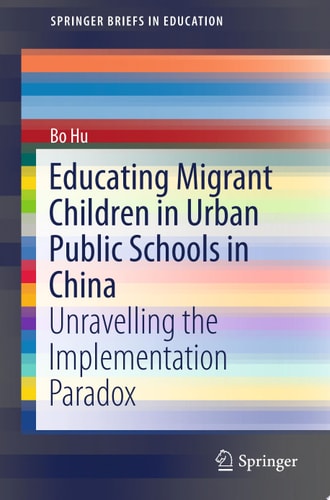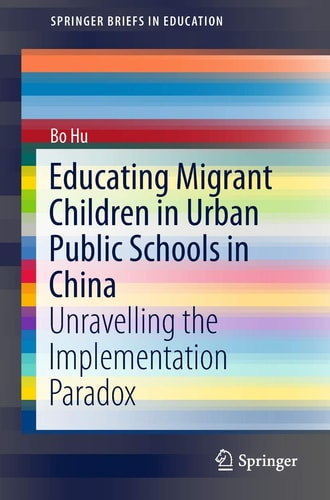
Educating Migrant Children in Urban Public Schools in China: Unravelling the Implementation Paradox
0
0
As an Amazon Associate and affiliate partner, Menrva Books earns from qualifying purchases. Learn more
Author Description
This book investigates the implementation of the education policy for migrant children, arguing that it has been selectively implemented: while some policy themes have been effectively implemented, others have not. Four factors underlie this selective implementation: specificity of policy goals, funding for education, local incentives in an exam-oriented education system, and intergroup relationships between migrant and urban children.
Menrva's Summary
THE THESIS
This book examines the paradoxical implementation of education policies for migrant children in China's urban public schools. It argues that while certain aspects of these policies have been effectively enacted, others have been neglected, leading to an uneven educational experience for migrant youth. The study identifies four key factors contributing to this selective implementation: the clarity of policy objectives, the allocation of educational funding, the incentives within an exam-driven system, and the social dynamics between migrant and local children.
THE SCOPE MAP
- Analysis of the implementation of education policy for migrant children in urban China.
- Exploration of the 'implementation paradox' where some policy goals are met and others are not.
- Identification and discussion of four core factors influencing selective policy implementation: policy specificity, funding, local incentives, and intergroup relations.
- Examination of the Chinese education system's exam-oriented structure and its impact on policy execution.
- Investigation into the social relationships between migrant and urban children within educational settings.
- Case studies or data illustrating the practical application and outcomes of education policies for migrant children.
THE AUTHORITY PERSPECTIVE
The book offers a critical analysis of educational policy implementation in China, focusing on the specific challenges faced by migrant children. It highlights the complexities and contradictions inherent in applying national policies within diverse local contexts, particularly in an education system heavily weighted towards examination performance. The research provides insights into how factors such as funding and social integration influence the effectiveness of educational reforms. The work is likely to be of interest to scholars and policymakers concerned with education, migration, and social inequality in China and other rapidly urbanizing societies.
Page Count:
115
Publication Date:
2018-07-02
Publisher:
Springer Nature Singapore
ISBN-10:
9811311463
ISBN-13:
9789811311468
History
Non-Fiction
Politics
Sociology
Migration Studies
China Studies
Urban Studies
Education Policy
Community Tags
Similar Books