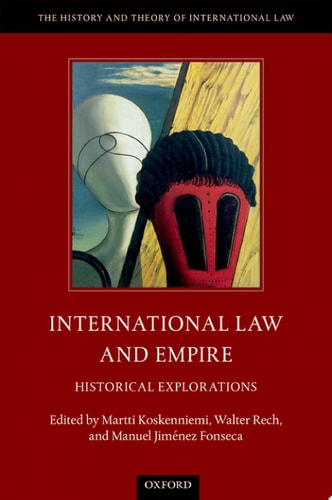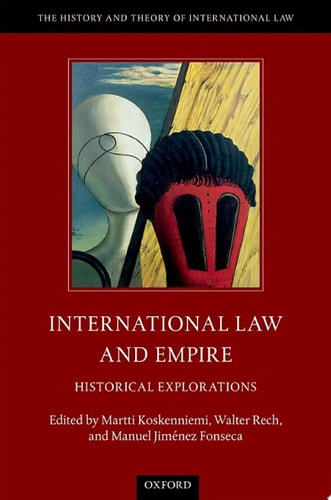
International Law and Empire: Historical Explorations
0
0
As an Amazon Associate and affiliate partner, Menrva Books earns from qualifying purchases. Learn more
Author Description
In times in which global governance in its various forms, such as human rights, international trade law, and development projects, is increasingly promoted by transnational economic actors and international institutions that seem to be detached from democratic processes of legitimation, the question of the relationship between international law and empire is as topical as ever. By examining this relationship in historical contexts from early modernity to the present, this volume aims to deepen current understandings of the way international legal institutions, practices, and narratives have shaped specifically imperial ideas about and structures of world governance. As it explores fundamental ways in which international legal discourses have operated in colonial as well as European contexts, the book enters a heated debate on the involvement of the modern law of nations in imperial projects. Each of the chapters contributes to this emerging body of scholarship by drawing out the complexity and ambivalence of the relationship between international law and empire. They expand on the critique of western imperialism while acknowledging the nuances and ambiguities of international legal discourse and, in some cases, the possibility of counter-hegemonic claims being articulated through the language of international law. Importantly, as the book suggests that international legal argument may sometimes be used to counter imperial enterprises, it maintains that international law can barely escape the Eurocentric framework within which the progressive aspirations of internationalism were conceived
Menrva's Summary
THE THESIS
This volume investigates the historical and theoretical relationship between international law and imperial projects from early modernity to the contemporary era. The editors, including noted legal scholar Martti Koskenniemi, curate a collection of essays that analyze how legal institutions and discourses have functioned as both instruments of imperial expansion and potential sites for counter-hegemonic resistance. The work argues that while international law often operates within a Eurocentric framework, its internal logic remains deeply ambivalent and capable of being repurposed.
THE SCOPE MAP
What You Will Find
- Historical analysis of international legal discourse from the early modern period to the present.
- Examination of the intersection between colonial administration and European legal development.
- Critical assessment of international institutions and their role in global governance.
Scope Limits
- The text does not provide a comprehensive history of all international legal treaties.
- It does not offer a prescriptive manual for reforming current international institutions.
THE AUTHORITY PERSPECTIVE
Scholars and legal historians frequently cite this volume as a significant contribution to the critical study of international law and its colonial origins. Readers often note the academic density of the prose, which is intended for an audience familiar with legal theory and historical discourse.
Page Count:
411
Publication Date:
2016-01-01
Publisher:
OUP Oxford
ISBN-10:
0192515020
ISBN-13:
9780192515025
History
Legal Theory
Colonialism
International Law
Professional Career & Trade
Community Tags
Similar Books