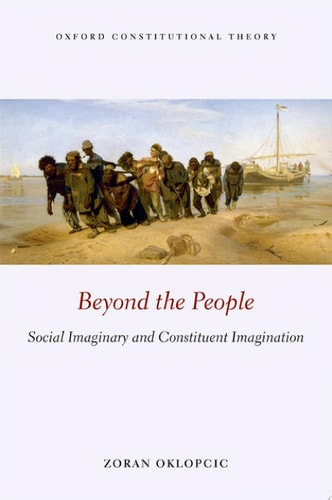
Beyond the People: Social Imaginary and Constituent Imagination
0
0
As an Amazon Associate and affiliate partner, Menrva Books earns from qualifying purchases. Learn more
Author Description
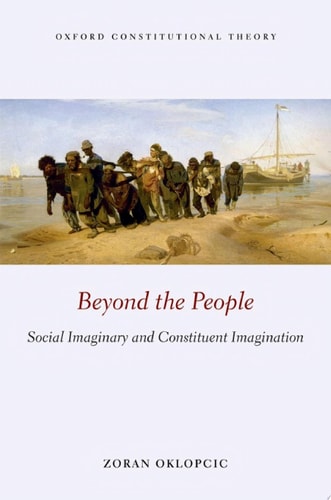
Beyond the People develops a provocative, interdisciplinary, and meta-theoretical critique of the idea of popular sovereignty. It asks simple but far-reaching questions: Can 'imagined' communities, or 'invented' peoples, ever be theorized without, at the same time, being re-imagined and re-invented anew? Can polemical concepts, such as popular sovereignty or constituent power, be theorized objectively? If, as this book argues, the answer to these questions is no, theorists who approach the figure of a sovereign people must acknowledge that their activity is inseparable from the practice of constituent imagination. Though widely accepted as important, even vital, for the development of political concepts, the social practice of imagination is almost always presumed to operate either historically or impersonally, but seldom individually. Those who theorize the figures of popular sovereignty do not see that they are, in effect, 'conjurors' of peoplehood. This book invites constitutional, international, normative, and other political and legal theorists of sovereign peoplehood to embrace the conjuring-side of their professional identities, as a way of exploring the possibility of moving beyond eternally recurring, insolvable, and increasingly irrelevant questions. Instead of asking: Who is the people? What is the function of constituent power? Where may the people exercise its right to self-determination? Beyond the People asks the reader to consider the prospect of a riskier and more adventurous theoretical road, that opens with the question: What do I as a 'theorist-imaginer', or 'conjuror of peoplehood', assume, anticipate, and aspire to as I theorize the vehicles that mediate the assumptions, anticipations, and aspirations of others? This question is examined throughout the book as it interrogates the idea of peoplehood beyond disciplinary boundaries, showing how polemical, visual, affective, conceptual, and allegorical language critically shapes our idea of peopleh
Menrva's Summary
THE THESIS
This work investigates whether the concept of popular sovereignty can be theorized objectively, or if the act of theorizing itself constitutes an inseparable practice of 'constituent imagination.' Zoran Oklopcic, a scholar in constitutional theory, challenges the traditional assumption that political theorists act as neutral observers of peoplehood. He argues that theorists are, in effect, 'conjurors' who actively shape the very concepts of sovereignty they claim to analyze, necessitating a shift toward a more self-reflective and adventurous theoretical framework.
THE SCOPE MAP
What You Will Find
- A meta-theoretical critique of popular sovereignty and constituent power.
- An interdisciplinary analysis incorporating political, legal, and normative theory.
- An examination of how visual, affective, and allegorical language constructs the idea of the 'people.'
Scope Limits
- The text does not provide a traditional historical account of sovereignty or a practical guide to constitutional drafting.
- It avoids offering definitive answers to standard political questions, focusing instead on the process of theorizing itself.
THE AUTHORITY PERSPECTIVE
Scholars in the field of constitutional theory recognize this text as a dense, provocative intervention that forces a re-evaluation of the theorist's role in political discourse. Readers frequently note the high level of academic rigor and the challenging nature of the author's meta-theoretical approach to established legal concepts.
Page Count:
416
Publication Date:
2018-01-01
Publisher:
OUP Oxford
ISBN-10:
0192519859
ISBN-13:
9780192519856
Philosophy
Legal Theory
Constitutional Law
Political Theory
Professional Career & Trade
Sovereignty
Community Tags
Similar Books