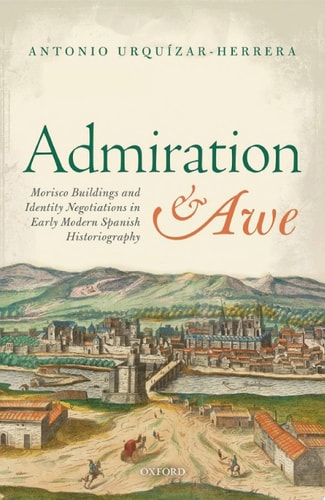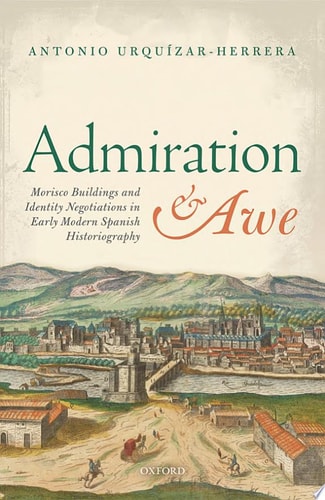
Admiration and Awe
0
0
As an Amazon Associate and affiliate partner, Menrva Books earns from qualifying purchases. Learn more
Author Description
This book offers the first systematic analysis of the cultural and religious appropriation of Andalusian architecture by Spanish historians during the sixteenth and seventeenth centuries. To date this process of Christian appropriation has generally been discussed as a phenomenon of architectural hybridisation. However, this was a period in which the construction of a Spanish national identity became a key focus of historical discourse. As a result, cultural hybridity encountered partial opposition from those seeking to establish cultural and religious homogeneity. Spain's Islamic past became a major concern in this period and historical writing served as the site for a complex negotiation of identity. Historians and antiquarians used a range of strategies to re-appropriate the meaning of medieval Islamic heritage as befitted the new identity of Spain as a Catholic monarchy and empire. On the one hand, the monuments' Islamic origin was subjected to historical revisions and re-identified as Roman or Phoenician. On the other hand, religious forgeries were invented that staked claims for buildings and cities having been founded by Christians prior to the arrival of the Muslims in Spain. Islamic stones were used as core evidence in debates that shaped the early development of archaeology, and they also became the centre of a historical controversy about the origin of Spain as a nation as well as its ecclesiastical history.
Menrva's Summary
THE THESIS
This book investigates how Spanish historians and antiquarians during the sixteenth and seventeenth centuries systematically reinterpreted and appropriated Andalusian Islamic architecture to construct a cohesive national and religious identity. Antonio Urquízar-Herrera, a scholar specializing in the cultural history of early modern Spain, utilizes a rigorous analysis of historical texts and architectural records to demonstrate how the Islamic past was negotiated. He argues that this process was not merely a passive hybridisation but a deliberate strategy to align the nation's heritage with its emerging status as a Catholic monarchy and empire.
THE SCOPE MAP
What You Will Find
- Analysis of sixteenth and seventeenth-century Spanish historiography regarding Islamic monuments.
- Examination of strategies used to re-identify Islamic architecture as Roman or Phoenician.
- Study of religious forgeries and their role in establishing pre-Islamic Christian foundations.
- Discussion of how architectural evidence influenced the early development of archaeology in Spain.
Scope Limits
- The study focuses primarily on the intellectual and historical discourse rather than a comprehensive architectural survey of all existing sites.
- It does not cover the post-seventeenth-century reception of these monuments or modern archaeological findings.
THE AUTHORITY PERSPECTIVE
Experts recognize this work as a significant contribution to the study of early modern Spanish identity and the historiography of architecture. Readers frequently note the academic density of the prose, which provides a detailed examination of how historical narratives were manipulated to serve political and religious agendas.
Page Count:
304
Publication Date:
2017-01-01
Publisher:
Oxford University Press
ISBN-10:
0192518003
ISBN-13:
9780192518002
History
Architecture
Spanish History
Historiography
Islamic Studies
Community Tags
Similar Books