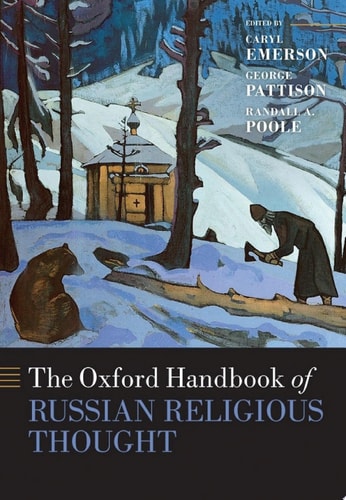
The Oxford Handbook of Russian Religious Thought
Author Description
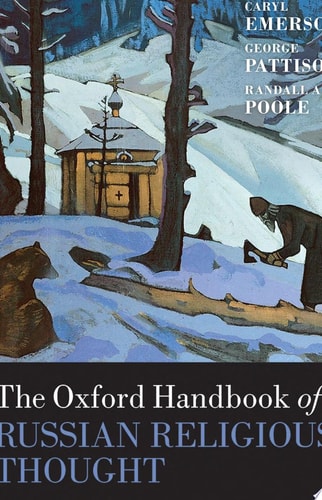
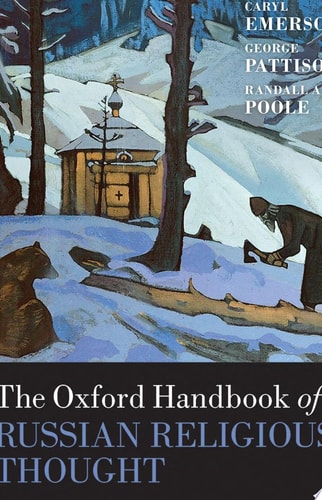
The Oxford Handbook of Russian Religious Thought is an authoritative new reference and interpretive volume detailing the origins, development, and influence of one of the richest aspects of Russian cultural and intellectual life - its religious ideas. After setting the historical background and context, the Handbook follows the leading figures and movements in modern Russian religious thought through a period of immense historical upheavals, including seventy years of officially atheist communist rule and the growth of an exiled diaspora with, e.g., its journal The Way. Therefore the shape of Russian religious thought cannot be separated from long-running debates with nihilism and atheism. Important thinkers such as Losev and Bakhtin had to guard their words in an environment of religious persecution, whilst some views were shaped by prison experiences. Before the Soviet period, Russian national identity was closely linked with religion - linkages which again are being forged in the new Russia. Relevant in this connection are complex relationships with Judaism. In addition to religious thinkers such as Philaret, Chaadaev, Khomiakov, Kireevsky, Soloviev, Florensky, Bulgakov, Berdyaev, Shestov, Frank, Karsavin, and Alexander Men, the Handbook also looks at the role of religion in aesthetics, music, poetry, art, film, and the novelists Dostoevsky and Tolstoy. Ideas, institutions, and movements discussed include the Church academies, Slavophilism and Westernism, theosis, the name-glorifying (imiaslavie) controversy, the God-seekers and God-builders, Russian religious idealism and liberalism, and the Neopatristic school. Occultism is considered, as is the role of tradition and the influence of Russian religious thought in the West.
Menrva's Summary
THE THESIS
This volume investigates the historical development, intellectual foundations, and cultural influence of Russian religious thought from its origins through the modern era. The editors, Caryl Emerson, George Pattison, and Randall A. Poole, curate a collection of scholarly essays that examine how religious ideas have shaped Russian national identity, literature, and political discourse. The text argues that Russian religious thought is inextricably linked to ongoing debates regarding nihilism, atheism, and the complex interplay between institutional faith and individual intellectual expression.
THE SCOPE MAP
What You Will Find
- Comprehensive analysis of major thinkers including Soloviev, Berdyaev, Bulgakov, and Florensky.
- Examination of the intersection between religious thought and artistic mediums like literature, music, and film.
- Historical context regarding the impact of Soviet-era persecution and the influence of the Russian diaspora.
- Exploration of specific movements such as Slavophilism, Westernism, and the Neopatristic school.
Scope Limits
- The volume focuses primarily on modern Russian religious thought rather than early medieval or pre-Petrine theological developments.
- While it touches on relationships with Judaism and occultism, it does not provide an exhaustive comparative theology of all non-Orthodox traditions.
THE AUTHORITY PERSPECTIVE
Scholars and academic reviewers recognize this volume as a definitive reference work for understanding the complexities of the Russian intellectual tradition. Readers frequently note the high level of academic density and the rigorous, multi-disciplinary approach taken by the contributors to map this specialized field.
Page Count:
752
Publication Date:
2020-01-01
Publisher:
OUP Oxford
ISBN-10:
0192516418
ISBN-13:
9780192516411
Religion
History
Philosophy
Theology
Intellectual History
Russian History
Community Tags
Similar Books