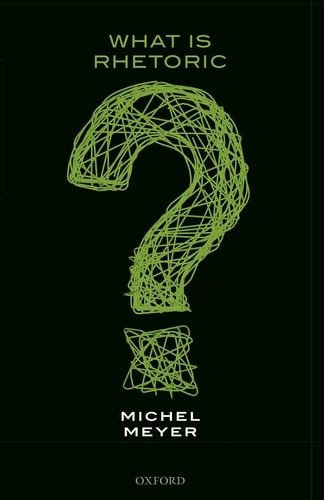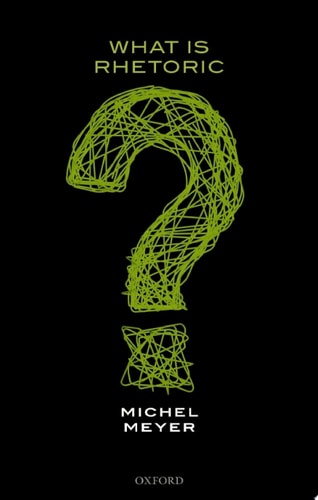
What is Rhetoric?
0
0
As an Amazon Associate and affiliate partner, Menrva Books earns from qualifying purchases. Learn more
Author Description
This book offers a new approach to the principles and functioning of rhetoric. In everyday life, we often debate issues or simply discuss questions. Rhetoric is the way in which we answer questions in an interpersonal context, when we want to have an effect on those with whom we are communicating. They can be convinced or charmed, persuaded or influenced, and the language used can range from reasoning to the sharing of narratives, literary or otherwise. What is Rhetoric? provides a breakthrough in the field, offering a systematic and unified view of the topic. The book combines the social aspects of rhetoric, such as the negotiation of distance between speakers, with the theory of emotions. All the principal authors from Plato and Aristotle to contemporary theorists are integrated into Michel Meyer's "problematological" conception of rhetoric, based on the primacy of questioning and answering in language and thought.
Menrva's Summary
THE THESIS
This book investigates the fundamental nature of rhetoric by proposing a unified, problematological framework centered on the primacy of questioning and answering in human communication. Michel Meyer, a scholar known for his work in problematology, synthesizes historical and contemporary rhetorical theories to explain how language functions as a tool for interpersonal influence. By examining the social negotiation of distance and the role of emotions, the author argues that rhetoric is not merely a set of stylistic devices but a core mechanism of human thought and interaction.
THE SCOPE MAP
What You Will Find
- A comprehensive overview of rhetorical history from Plato and Aristotle to modern theorists.
- The application of the "problematological" method to analyze interpersonal communication.
- An integration of emotional theory with social negotiation strategies.
Scope Limits
- The text does not provide a practical, step-by-step guide for public speaking or debate training.
- It does not focus on the technical analysis of specific literary texts outside of their rhetorical function.
THE AUTHORITY PERSPECTIVE
Scholars and students of philosophy often recognize this work as a significant contribution to the systematization of rhetorical theory. Readers frequently note the academic density of the prose, which requires a foundational understanding of philosophical discourse to fully grasp the author's conceptual framework.
Page Count:
266
Publication Date:
2017-01-01
Publisher:
OUP Oxford
ISBN-10:
0192525042
ISBN-13:
9780192525048
Non-Fiction
Philosophy
English
Linguistics
Communication Studies
Rhetoric
English & College Success