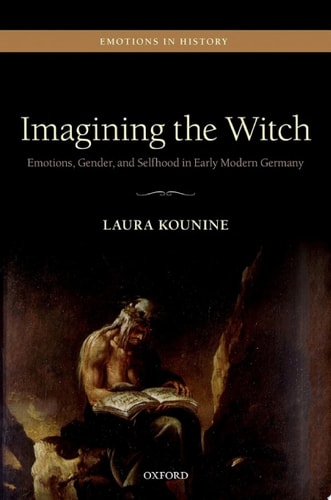
Imagining the Witch: Emotions, Gender, and Selfhood in Early Modern Germany
0
0
As an Amazon Associate and affiliate partner, Menrva Books earns from qualifying purchases. Learn more
Author Description
Imagining the Witch explores emotions, gender, and selfhood through the lens of witch-trials in early modern Germany. Witch-trials were clearly a gendered phenomenon, but witchcraft was not a uniquely female crime. While women constituted approximately three quarters of those tried for witchcraft in the Holy Roman Empire, a significant minority were men. Witchcraft was also a crime of unbridled passion: it centred on the notion that one person's emotions could have tangible and deadly physical consequences. Yet it is also true that not all suspicions of witchcraft led to a formal accusation, and not all witch-trials led to the stake. Indeed, just over half the total number put on trial for witchcraft in early modern Europe were executed. In order to understand how early modern people imagined the witch, we must first begin to understand how people understood themselves and each other; this can help us to understand how the witch could be a member of the community, living alongside their accusers, yet inspire such visceral fear. Through an examination of case studies of witch-trials that took place in the early modern Lutheran duchy of Württemberg in southwestern Germany, Laura Kounine examines how the community, church, and the agents of the law sought to identify the witch, and the ways in which ordinary men and women fought for their lives in an attempt to avoid the stake. The study further explores the visual and intellectual imagination of witchcraft in this period in order to piece together why witchcraft could be aligned with such strong female stereotypes on the one hand, but also be imagined as a crime that could be committed by any human, whether young or old, male or female. By moving beyond stereotypes of the witch, Imagining the Witch argues that understandings of what constituted witchcraft and the 'witch' appear far more contested and unstable than has previously been suggested. It also suggests new ways of thinking about early modern selfhood which mo
Menrva's Summary
THE THESIS
This book investigates how emotions, gendered perceptions, and concepts of selfhood shaped the identification and prosecution of witches in early modern Germany. Laura Kounine, a historian specializing in early modern European culture, utilizes archival records from the Lutheran duchy of Württemberg to challenge traditional narratives regarding the witch-trial phenomenon. She argues that the identity of the 'witch' was a fluid and highly contested construct, deeply embedded in the emotional landscape and social anxieties of the period.
THE SCOPE MAP
What You Will Find
- Analysis of witch-trial records from the Lutheran duchy of Württemberg.
- Examination of the intersection between emotional expression and legal culpability.
- Investigation into the visual and intellectual representations of witchcraft.
- Case studies detailing the defense strategies employed by the accused.
Scope Limits
- The study focuses primarily on the Lutheran context of southwestern Germany rather than the entirety of the Holy Roman Empire.
- It does not provide a comprehensive statistical survey of all European witch-trials.
THE AUTHORITY PERSPECTIVE
Scholars in the field of early modern history recognize this work as a significant contribution to the study of emotional history and gendered social dynamics. Readers frequently note the academic rigor of the prose and the author's ability to synthesize complex archival data into a coherent cultural analysis.
Page Count:
291
Publication Date:
2018-01-01
Publisher:
OUP Oxford
ISBN-10:
019252481X
ISBN-13:
9780192524812
History
Cultural History
Early Modern
Witchcraft
Gender Studies
Special Topics
Social History
Community Tags
Similar Books