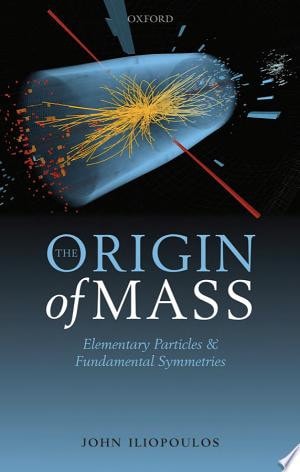
The Origin of Mass
0
0
As an Amazon Associate and affiliate partner, Menrva Books earns from qualifying purchases. Learn more
Author Description
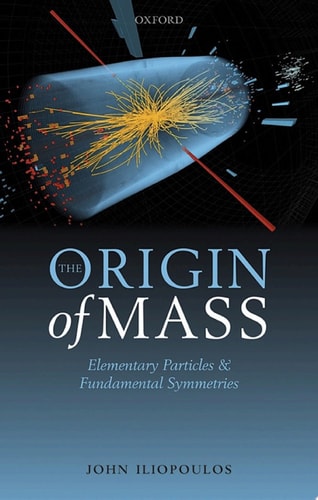
The Discovery Of A New Elementary Particle At The Large Hadron Collider At Cern In 2012 Made Headlines In World Media. Since We Already Know Of A Large Number Of Elementary Particles, Why Did This Latest Discovery Generate So Much Excitement? This Small Book Reveals That This Particle Provides The Key To Understanding One Of The Most Extraordinary Phenomena Which Occurred In The Early Universe. It Introduces The Mechanism That Made Possible, Within Tiny Fractions Of A Second After The Big Bang, The Generation Of Massive Particles. The Origin Of Mass Is A Guided Tour Of Cosmic Evolution, From The Big Bang To The Elementary Particles We Study In Our Accelerators Today. The Guiding Principle Of This Book Is A Concept Of Symmetry Which, In A Profound And Fascinating Way, Seems To Determine The Structure Of The Universe.
Menrva's Summary
THE THESIS
This book investigates the fundamental mechanism behind the generation of mass in elementary particles and its role in the early evolution of the universe. Author John Iliopoulos, a distinguished theoretical physicist, utilizes the 2012 discovery of the Higgs boson at CERN as a focal point to explain the underlying symmetry principles that govern particle physics. He constructs a framework that connects the conditions of the Big Bang to the current standard model of physics, providing a clear explanation for why this specific particle discovery was significant to the scientific community.
THE SCOPE MAP
What You Will Find
- An overview of the Higgs mechanism and its role in particle mass generation
- Historical context of the Large Hadron Collider experiments
- Explanations of symmetry principles in quantum field theory
- A timeline of cosmic evolution from the Big Bang to modern particle physics
Scope Limits
- The text does not provide exhaustive mathematical derivations for advanced physics students
- It does not cover the entirety of string theory or alternative theories of gravity
THE AUTHORITY PERSPECTIVE
Experts recognize this work as an accessible entry point for readers interested in the theoretical foundations of particle physics. Readers frequently note the clarity of the prose, which manages to distill complex symmetry concepts into a format suitable for those without a doctorate in physics.
Page Count:
176
Publication Date:
2017-01-01
Publisher:
Oxford University Press
ISBN-10:
0192527533
ISBN-13:
9780192527530
Non-Fiction
Science
Physics
Cosmology
Particle Physics
Community Tags
Similar Books