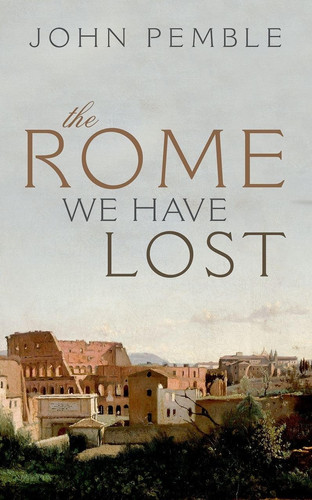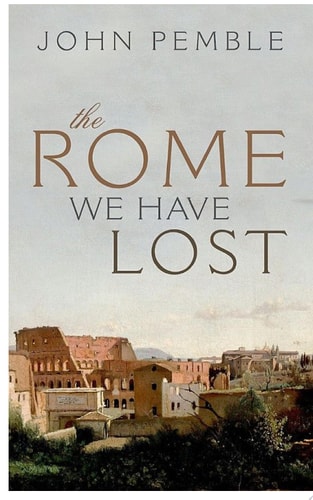
The Rome We Have Lost
0
0
As an Amazon Associate and affiliate partner, Menrva Books earns from qualifying purchases. Learn more
Author Description
For a thousand years, Rome was enshrined in myth and legend as the Eternal City. No Grand Tour would be complete without a visit to its ruins. But from 1870 all that changed. A millennium ended as its solitary moonlit ruins became floodlit monuments on traffic islands, and its perimeter shifted from the ancient nineteen-kilometre wall with twelve gates to a fifty-kilometre ring road with thirty-three roundabouts and spaghetti junctions. The Rome We Have Lost is the first full investigation of this change. John Pemble musters popes, emperors, writers, exiles, and tourists, to weave a rich fabric of Roman experience. He tells the story of how, why, and with what consequences that Rome, centre of Europe and the world, became a national capital: no longer central and unique, but marginal and very similar in its problems and its solutions to other modern cities with a heavy burden of 'heritage'. This far-reaching book illuminates the historical significance of Rome's transformation and the crisis that Europe is now confronting as it struggles to re-invent without its ancestral centre -- the city that had made Europe what it was, and defined what it meant to be European.
Menrva's Summary
THE THESIS
This book investigates the historical and cultural transformation of Rome from a mythic, eternal center of European identity into a modern national capital grappling with the burdens of heritage. John Pemble, a historian of European culture, utilizes a wide array of primary sources—including accounts from popes, emperors, writers, and travelers—to document the physical and symbolic shift of the city following 1870. He argues that the modernization of Rome, characterized by the expansion of its infrastructure and the loss of its unique status, mirrors a broader crisis in European identity as the continent struggles to define itself without its ancestral center.
THE SCOPE MAP
What You Will Find
- A detailed historical analysis of Rome's transition from a papal and imperial city to a modern Italian capital.
- Examination of the impact of urban development, such as ring roads and modern infrastructure, on the city's ancient landscape.
- A synthesis of diverse perspectives from historical figures, exiles, and tourists who witnessed the city's evolution.
Scope Limits
- The book does not provide a comprehensive architectural guide to Roman ruins.
- It does not focus on contemporary political policy beyond the context of historical heritage management.
THE AUTHORITY PERSPECTIVE
Scholars and critics recognize this work as a significant contribution to the study of urban history and the cultural perception of Rome. Readers frequently note the academic rigor of the prose and the author's success in connecting local urban changes to the wider European identity crisis.
Page Count:
185
Publication Date:
2017-01-01
Publisher:
OUP Oxford
ISBN-10:
0192526014
ISBN-13:
9780192526014
History
Rome
Cultural History
Urban Studies
Italy history
European History
Italy