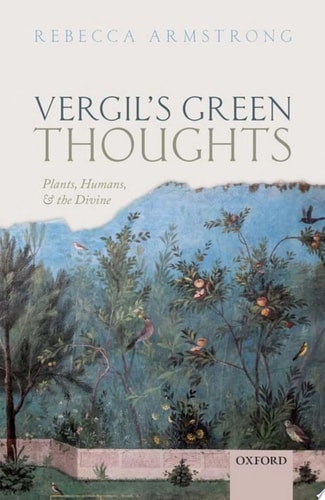
Vergil's Green Thoughts: Plants, Humans, and the Divine
0
0
As an Amazon Associate and affiliate partner, Menrva Books earns from qualifying purchases. Learn more
Author Description
The Eclogues, Georgics, And Aeneid Abound With Plants, Yet Much Vergilian Criticism Underestimates Their Significance Beyond Attractive Background Detail Or The Occasional Symbolic Set-piece. This Volume Joins The Growing Field Of Nature-centred Studies Of Literature, Looking Head-on At Vergil's Plants And Trees To Reveal How Fundamental They Are To An Understanding Of The Poet's Outlook On Religion, Culture, And Mankind's Place Within The World. Divided Into Two Parts, The First Explores The Religious And More Diffusely Numinous Aspects Of Vergil's Plants, From Awe-inspiring Sacred Groves To Divinely Promoted Fields Of Corn, And Shows How Both Cultivated And Uncultivated Plants Fit Within And Help To Shape The Complex Landscape Of Vergilian (and, More Broadly, Roman) Religious Thought. In The Second Half Of The Book, The Focus Shifts Towards Human Interactions With Plants From The Perspectives Of Both Cultivation And Relaxation, Exploring The Love-hate Relationship With Vegetation Which Sometimes Supports And Sometimes Contests The Human Self-image As The World's Dominant Species. Combining A Series Of Close Readings Of A Wide Range Of Passages With The Identification Of Broader Patterns Of Association, Vergil's Green Thoughts Appositely Reveals And Celebrates The Complexity And Variety Of Vergilian Flora. Introduction -- Pt. I: Numen: 1. Numenous Habitats -- 2. God's Special Species -- Pt. Ii: Homo: 3. Tame Plants -- 4. Wild Plants -- Weeds -- Conclusions. Rebecca Armstrong. Includes Bibliographical References (pages 299-317) And Indexes.
Menrva's Summary
THE THESIS
This volume investigates the significance of plants and trees within Vergil's major works to determine how they shape the poet's perspective on religion, culture, and the human condition. Rebecca Armstrong, a scholar of classical literature, utilizes close readings of the Eclogues, Georgics, and Aeneid to challenge the notion that flora in Vergil's writing serves merely as decorative background. She argues that these botanical elements are central to understanding the complex relationship between the divine, the natural world, and Roman identity.
THE SCOPE MAP
What You Will Find
- Analysis of sacred groves and divinely associated crops in Roman religious thought
- Examination of human interaction with vegetation through cultivation and leisure
- Comparative study of wild versus tame plant species in Vergilian texts
- Close readings of specific passages across the Eclogues, Georgics, and Aeneid
Scope Limits
- The study focuses primarily on Vergil's corpus and does not provide an exhaustive history of Roman agriculture or botany.
THE AUTHORITY PERSPECTIVE
Scholars recognize this work as a significant contribution to the field of ecocriticism within classical studies. Readers frequently note the academic rigor of the analysis and the author's ability to synthesize botanical detail with complex theological and cultural themes.
Page Count:
352
Publication Date:
2019-01-01
Publisher:
Oxford University Press,
ISBN-10:
0192524208
ISBN-13:
9780192524201
English
Virgil
Literary Criticism
Nature Studies
Roman
English & College Success
Community Tags
Similar Books