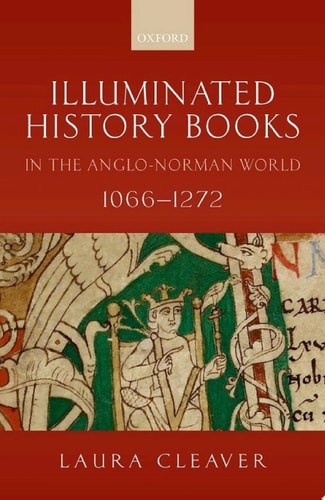
Illuminated History Books in the Anglo-Norman World, 1066-1272
0
0
As an Amazon Associate and affiliate partner, Menrva Books earns from qualifying purchases. Learn more
Author Description
During the twelfth and thirteenth centuries, texts about the recent and more distant past were produced in remarkable numbers in the lands controlled by the kings of England. This may be seen, in part, as a response to changing social and political circumstances in the wake of the Norman conquest of England in 1066. The names of many of the twelfth and thirteenth-century historians are well known, and they include Orderic Vitalis, William of Malmesbury, John of Worcester, Henry of Huntingdon, Gerald of Wales, and Matthew Paris. Yet the manuscripts in which these works survive are also evidence for the involvement of many other people in the production of history, as patrons, scribes, and artists. Illuminated History Books in the Anglo-Norman World focuses on history books of the twelfth and thirteenth centuries to examine what they reveal about the creation, circulation, and reception of history in this period. In particular, this research concentrates on illuminated manuscripts. These volumes represent an additional investment of time, labour, and resources, and combinations of text and imagery shed light on engagements with the past as manuscripts were copied at specific times and places. Imagery could be used to reproduce the features of older sources, but it was also used to call attention to particular elements of a text, and to impose frameworks onto the past. As a result, Illuminated History Books in the Anglo-Norman World has the potential to change the way in which we see the medieval past and its historians.
Menrva's Summary
THE THESIS
How did the production and illumination of historical manuscripts in the Anglo-Norman world reflect the social, political, and cultural priorities of the twelfth and thirteenth centuries? Laura Cleaver, a specialist in medieval art and manuscript culture, examines the intersection of text and image in historical records produced between 1066 and 1272. By analyzing the physical manuscripts created by scribes, artists, and patrons, the author argues that these visual elements were not merely decorative but served as deliberate tools to frame historical narratives and reinforce specific political agendas. The study utilizes a cross-disciplinary approach, combining codicology, art history, and historiography to interpret how these volumes were received and circulated within the Anglo-Norman sphere.
THE SCOPE MAP
What You Will Find
- Analysis of illuminated historical manuscripts from 1066 to 1272.
- Examination of the roles of patrons, scribes, and artists in manuscript production.
- Investigation into how visual imagery was used to emphasize specific textual elements.
- Case studies of works by historians such as Orderic Vitalis, William of Malmesbury, and Matthew Paris.
Scope Limits
- The study is geographically restricted to the lands controlled by the kings of England during the specified period.
- The research focuses primarily on illuminated manuscripts rather than the entirety of the textual historical record.
THE AUTHORITY PERSPECTIVE
Scholars in the field of medieval studies recognize this work as a significant contribution to the understanding of how visual culture shaped historical consciousness in the Anglo-Norman world. Readers frequently note the academic rigor and the detailed codicological analysis provided by the author.
Page Count:
242
Publication Date:
2018-01-01
Publisher:
OUP Oxford
ISBN-10:
0192523627
ISBN-13:
9780192523624
History
European History
Art History
Illumination Of Books And Manuscripts Norman
England
Historiography
English Manuscripts
Community Tags
Similar Books