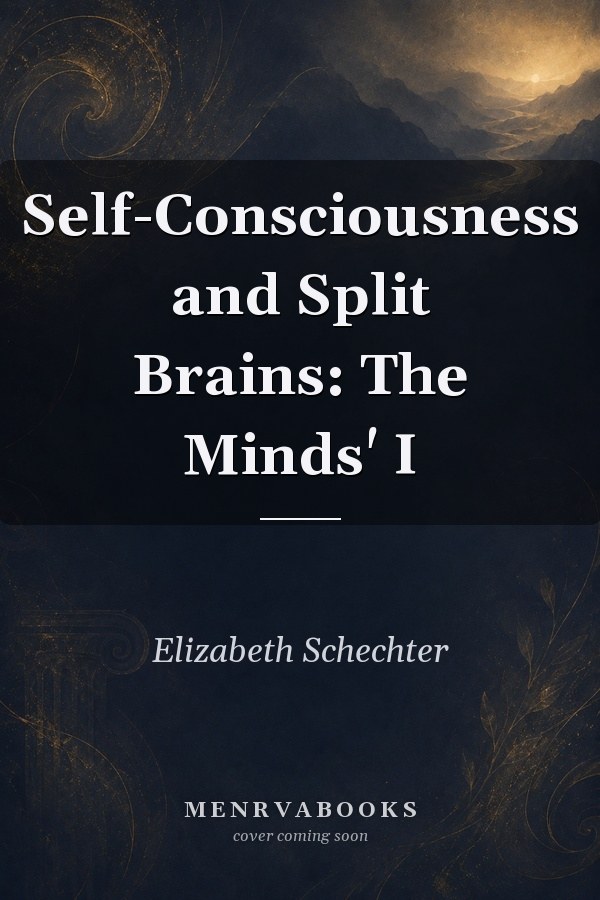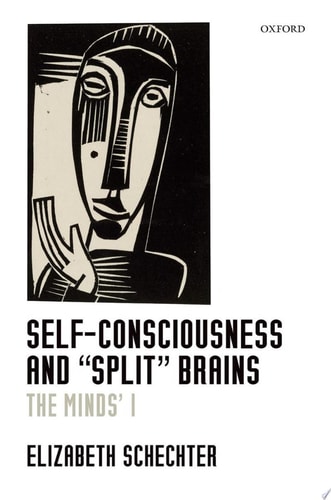
Self-Consciousness and Split Brains
0
0
As an Amazon Associate and affiliate partner, Menrva Books earns from qualifying purchases. Learn more
Author Description
Could A Single Human Being Ever Have Multiple Conscious Minds? Some Human Beings Do. The Corpus Callosum Is A Large Pathway Connecting The Two Hemispheres Of The Brain. In The Second Half Of The Twentieth Century A Number Of People Had This Pathway Cut Through As A Treatment For Epilepsy. They Became Colloquially Known As Split-brain Subjects. After The Two Hemispheres Of The Brain Are Cortically Separated In This Way, They Begin To Operate Unusually Independently Of Each Other In The Realm Of Thought, Action, And Conscious Experience, Almost As If Each Hemisphere Now Had A Mind Of Its Own. Philosophical Discussion Of The Split-brain Cases Has Overwhelmingly Focused On Questions Of Psychological Identity In Split-brain Subjects, Questions Like: How Many Subjects Of Experience Is A Split-brain Subject? How Many Intentional Agents? How Many Persons? On The One Hand, Under Experimental Conditions, Split-brain Subjects Often Act In Ways Difficult To Understand Except In Terms Of Each Of Them Having Two Distinct Streams Or Centers Of Consciousness. Split-brain Subjects Thus Evoke The Duality Intuition: That A Single Split-brain Human Being Is Somehow Composed Of Two Thinking, Experiencing, And Acting Things. On The Other Hand, A Split-brain Subject Nonetheless Seems Like One Of Us, At The End Of The Day, Rather Than Like Two People Sharing One Body. In Other Words, Split-brain Subjects Also Evoke The Unity Intuition: That A Split-brain Subject Is One Person. Elizabeth Schechter Argues That There Are In Fact Two Minds, Subjects Of Experience, And Intentional Agents Inside Each Split-brain Human Being: Right And Left. On The Other Hand, Each Split-brain Subject Is Nonetheless One Of Us. The Key To Reconciling These Two Claims Is To Understand The Ways In Which Each Of Us Is Transformed By Self-consciousness.
Menrva's Summary
THE THESIS
Can a single human being possess multiple distinct conscious minds, and how does this reconcile with our intuitive sense of personal unity? Elizabeth Schechter, a philosopher specializing in the philosophy of mind and cognitive science, investigates the split-brain phenomenon to address this question. She argues that while split-brain subjects possess two distinct streams of consciousness and intentional agency, they remain a single person, proposing that self-consciousness is the mechanism that bridges this apparent contradiction.
THE SCOPE MAP
What You Will Find
- Analysis of split-brain experimental data from the late twentieth century.
- A philosophical framework for distinguishing between 'subjects of experience' and 'persons'.
- Examination of the duality versus unity intuition in neuro-psychological cases.
Scope Limits
- The text does not provide a comprehensive medical history of epilepsy treatments.
- It does not offer a clinical guide for the treatment of split-brain patients.
THE AUTHORITY PERSPECTIVE
Experts in the philosophy of mind recognize this work as a rigorous contribution to the debate on psychological identity and the nature of the self. Readers frequently note the academic density of the prose, which requires a foundational understanding of cognitive science and philosophical terminology.
Page Count:
352
Publication Date:
2018-01-01
Publisher:
Oxford University Press
ISBN-10:
0192537504
ISBN-13:
9780192537508
Philosophy
Psychology
Neuroscience
Consciousness Studies
Community Tags
Similar Books