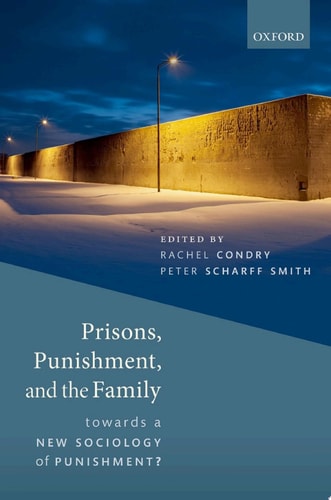
Prisons, Punishment, and the Family: Towards a New Sociology of Punishment?
0
0
As an Amazon Associate and affiliate partner, Menrva Books earns from qualifying purchases. Learn more
Author Description
Every year millions of families are affected by the imprisonment of a family member. Children of imprisoned parents alone can be counted in millions in the USA and in Europe. It is a bewildering fact that while we have had prisons for centuries, and the deprivation of liberty has been a central pillar in the Western mode of punishment since the early nineteenth century, we have only relatively recently embarked upon a serious discussion of the severe effects of imprisonment for the families and relatives of offenders and the implications this has for society. This book draws together some of the excellent research that addresses the impact of criminal justice and incarceration in particular upon the families of offenders. It assembles examples of recent and ongoing studies from eight different countries in order to not only learn about the secondary effects and 'collateral consequences' of imprisonment but also to understand what the experiences and lived realities of prisoners' families means for the sociology of punishment and our broader understanding of criminal justice systems. While punishment and society scholarship has gained significant ground in recent years it has often remained silent on the ways in which the families of prisoners are affected by our practices of punishment. This book provides evidence of the importance of including families within this scholarship and explores themes of legitimacy, citizenship, human rights, marginalization, exclusion, and inequality.
Menrva's Summary
THE THESIS
This book investigates the often-overlooked impact of incarceration on the families of offenders and argues for the integration of these experiences into the broader sociology of punishment. Editors Peter Scharff Smith and Rachel Condry compile interdisciplinary research to examine how the deprivation of liberty extends beyond the individual prisoner to affect millions of relatives. By analyzing the collateral consequences of imprisonment, the authors challenge existing scholarship to account for the social, legal, and human rights implications of current penal practices.
THE SCOPE MAP
What You Will Find
- Comparative studies from eight different countries regarding the secondary effects of incarceration.
- Analysis of themes including legitimacy, citizenship, marginalization, and systemic inequality.
- Theoretical frameworks for incorporating family experiences into penal sociology.
Scope Limits
- The text does not provide a comprehensive global survey of all prison systems.
- It does not offer specific policy prescriptions or legislative reform manuals.
THE AUTHORITY PERSPECTIVE
Experts identify this work as a significant contribution to the field of penal sociology for its focus on the neglected intersection of family life and criminal justice. Readers frequently note the academic rigor of the research and its success in highlighting the structural consequences of incarceration on non-offending family members.
Page Count:
328
Publication Date:
2018-01-01
Publisher:
OUP Oxford
ISBN-10:
0192538144
ISBN-13:
9780192538147
Professional Career & Trade
Human rights
Sociology
Marriage & FamilyFamily Science
Social policy
Family Studies
Criminology
Community Tags
Similar Books