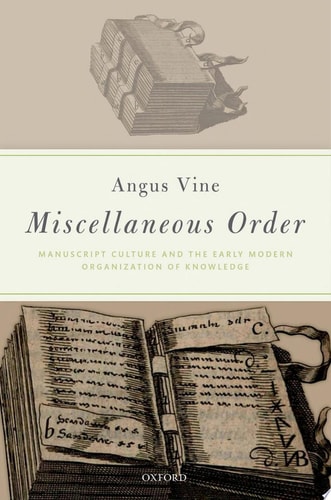
Miscellaneous Order
0
0
As an Amazon Associate and affiliate partner, Menrva Books earns from qualifying purchases. Learn more
Author Description
This Book Examines One Of The Most Pervasive, But Also Perplexing, Textual Phenomena Of The Early Modern World: The Manuscript Miscellany. Faced With Multiple Problems Of Definition, Categorization, And (often Conflicting) Terminology, Modern Scholars Have Tended To Dismiss The Miscellany As Disorganized And Chaotic. Miscellaneous Order Radically Challenges That View By Uncovering The Various Forms Of Organization And Order Previously Hidden In Early Modern Manuscript Books. Drawing On Original Literary And Historical Research, And Examining Both The Materiality Of Early Modern Manuscripts And Their Contents, This Book Sheds New Light On The Transcriptive And Archival Practices Of Early Modern Britain, As Well As On The Broader Intellectual Context Of Manuscript Culture And Its Scholarly Afterlives. Based On Extensive Archival Research, And Interdisciplinary In Both Subject And Matter, Miscellaneous Order Focuses On The Myriad Kinds Of Manuscript Compiled And Produced In The Early Modern Era. Showing That The Miscellany Was Essential To The Organization Of Knowledge Across A Range Of Genres And Disciplines, From Poetry To Science, And From Recipe Books To Accounts, It Proposes A New Model For Understanding The Proliferation Of Manuscript Material In The Sixteenth And Seventeenth Centuries. By Restoring Attention To 'miscellaneous Order' In This Way, It Shows That We Have Fundamentally Misunderstood How Early Modern Men And Women Read, Wrote, And Thought. Rather Than A Textual Form Characterized By An Absence Of Order, The Miscellany, It Argues, Operated As An Epistemically And Aesthetically Productive System Throughout The Early Modern Period.
Menrva's Summary
THE THESIS
Does the early modern manuscript miscellany represent a chaotic collection of texts, or does it function as a sophisticated, organized system for knowledge management? Angus Vine, a scholar of early modern literature and culture, challenges the prevailing academic dismissal of miscellanies as disorganized. By analyzing the materiality and content of these manuscripts, Vine argues that they served as vital, structured tools for intellectual production and archival practice in sixteenth and seventeenth-century Britain.
THE SCOPE MAP
What You Will Find
- Analysis of manuscript materiality and transcription practices
- Examination of diverse genres including poetry, scientific notes, and account books
- A proposed new model for understanding early modern knowledge organization
- Historical research into the intellectual context of manuscript culture
Scope Limits
- Focus is primarily restricted to British manuscripts from the sixteenth and seventeenth centuries
- Does not provide an exhaustive catalog of every extant miscellany from the period
THE AUTHORITY PERSPECTIVE
Scholars in the field of early modern studies recognize this work as a significant intervention in the study of manuscript culture. The text is noted for its interdisciplinary approach and its success in reevaluating the structural logic of previously overlooked archival materials.
Page Count:
304
Publication Date:
2018-01-01
Publisher:
Oxford University Press
ISBN-10:
019253761X
ISBN-13:
9780192537614
History
Cultural History
Literary Criticism
Early Modern
Bibliography
Community Tags
Similar Books