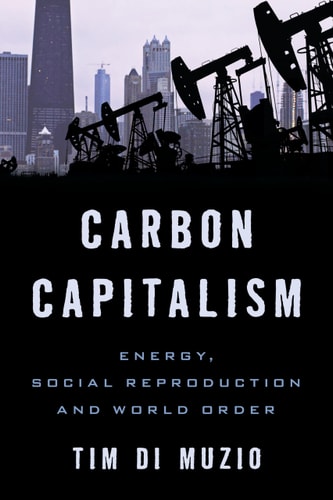
Carbon Capitalism: Energy, Social Reproduction and World Order
0
0
As an Amazon Associate and affiliate partner, Menrva Books earns from qualifying purchases. Learn more
Author Description
Modern civilization and the social reproduction of capitalism are bound inextricably with fossil fuel consumption. But as carbon energy resources become scarcer, what implications will this have for energy-intensive modes of life? Can renewable energy sustain high levels of accumulation?? Or will we witness the end of existing capitalist economies? This book provides an innovative and timely study that mobilizes a new theory of capitalism to explain the rise and fall of petro-market civilization. Di Muzio investigates how theorists of political economy have largely taken energy for granted and illuminates how the exploitation of fossil fuels increased the universalization and magnitude of capital accumulation. He then examines the likelihood of renewable resources providing a feasible alternative and asks whether they can beat peak oil prices to sustain food production, health care, science and democracy. Using the capital as power framework, this book considers the unevenly experienced consequences of monetizing fossil fuels for people and the planet.
Menrva's Summary
THE THESIS
Modern civilization's reliance on fossil fuels is inextricably linked to the social reproduction of capitalism, but the increasing scarcity of carbon energy resources poses a fundamental challenge to energy-intensive lifestyles. The book investigates the implications of diminishing fossil fuel availability for capitalist economies, questioning whether renewable energy can sustain current levels of accumulation or if existing economic systems will collapse. It mobilizes a new theory of capitalism to explain the rise and fall of 'petro-market civilization,' arguing that political economy theorists have largely overlooked the critical role of energy. The author examines how fossil fuel exploitation has driven capital accumulation and assesses the viability of renewable alternatives in sustaining essential services like food production, healthcare, science, and democracy.
THE SCOPE MAP
- Analysis of the inextricable link between fossil fuel consumption and the social reproduction of capitalism.
- An examination of the implications of dwindling carbon energy resources for energy-intensive modes of life.
- An assessment of whether renewable energy can sustain high levels of capital accumulation.
- A new theory of capitalism to explain the rise and fall of petro-market civilization.
- An investigation into how political economy theorists have largely taken energy for granted.
- An analysis of how fossil fuel exploitation increased the universalization and magnitude of capital accumulation.
- An assessment of the likelihood of renewable resources providing a feasible alternative to fossil fuels.
THE AUTHORITY PERSPECTIVE
This book offers an innovative and timely study that mobilizes a new theory of capitalism to explain the rise and fall of petro-market civilization. It critically examines how the exploitation of fossil fuels has driven capital accumulation and questions the capacity of renewable resources to sustain essential societal functions. The work utilizes the capital as power framework to consider the unevenly experienced consequences of monetizing fossil fuels for both people and the planet. The analysis suggests that the transition away from fossil fuels presents significant challenges to existing capitalist economies.
Page Count:
206
Publication Date:
2015-08-31
Publisher:
Bloomsbury Academic
ISBN-10:
178348098X
ISBN-13:
9781783480982
Politics
Economics
Non-Fiction
Capitalism
Energy
Community Tags
Similar Books