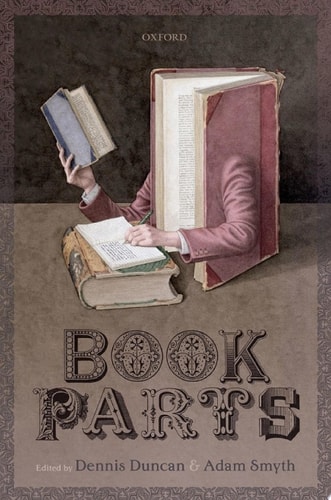
Book Parts
0
0
As an Amazon Associate and affiliate partner, Menrva Books earns from qualifying purchases. Learn more
Author Description
What would an anatomy of the book look like? There is the main text, of course, the file that the author proudly submits to their publisher. But around this, hemming it in on the page or enclosing it at the front and back of the book, there are dozens of other texts—page numbers and running heads, copyright statements and errata lists—each possessed of particular conventions, each with their own lively histories. To consider these paratexts—recalling them from the margins, letting them take centre stage—is to be reminded that no book is the sole work of the author whose name appears on the cover; rather, every book is the sum of a series of collaborations. It is to be reminded, also, that not everything is intended for us, the readers. There are sections that are solely directed at others—binders, librarians, lawyers—parts of the book that, if they are working well, are working discreetly, like a theatrical prompt, whispering out of the audience's ear-shot Book Parts is a bold and imaginative intervention in the fast growing field of book history: it pulls the book apart. Over twenty-two chapters, Book Parts tells the story of the components of the book: from title pages to endleaves; from dust jackets to indexes—and just about everything in between. Book Parts covers a broad historical range that runs from the pre-print era to the digital, bringing together the expertise of some of the most exciting scholars working on book history today in order to shine a new light on these elements hiding in plain sight in the books we all read.
Menrva's Summary
THE THESIS
This work investigates the history and function of the various components that constitute a book, arguing that these elements are essential, collaborative, and often overlooked parts of the reading experience. The authors, Dennis Duncan and Adam Smyth, curate a collection of essays from leading scholars in the field of book history. By examining the evolution of paratexts—from title pages to indexes—the book demonstrates how these features facilitate communication between authors, publishers, and readers across centuries of print culture.
THE SCOPE MAP
What You Will Find
- Historical analysis of book components including dust jackets, endleaves, and errata lists.
- Examination of the collaborative nature of book production involving binders, librarians, and lawyers.
- A chronological survey spanning from the pre-print era through the digital age.
Scope Limits
- The text focuses primarily on the physical and structural elements of the codex rather than the literary analysis of the main text content.
- It does not provide a comprehensive technical manual for modern book design or manufacturing processes.
THE AUTHORITY PERSPECTIVE
Scholars and critics recognize this volume as a significant contribution to the field of book history, noting its ability to make complex bibliographic concepts accessible. Readers frequently highlight the clarity of the prose and the effectiveness of the contributors in revealing the hidden mechanics of the printed object.
Page Count:
342
Publication Date:
2019-01-01
Publisher:
OUP Oxford
ISBN-10:
019254053X
ISBN-13:
9780192540539
History
Non-Fiction
English & College Success
Books history
Book History
Writing
Publishing
English
Literary Criticism
Bibliography
Community Tags
Similar Books