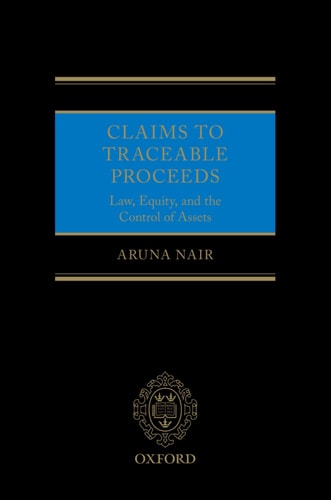
Claims to Traceable Proceeds: Law, Equity, and the Control of Assets
0
0
As an Amazon Associate and affiliate partner, Menrva Books earns from qualifying purchases. Learn more
Author Description
In this new book, Aruna Nair sets out her arguments for a re-evaluation of the law of tracing. A new model of the law of tracing is proposed and the book demonstrates how current problems can be solved using this new model. The rules of tracing are not shown not to be pure rules of evidence, aimed at resolving factual uncertainties; rather, they are explained as substantive rules of law, delineating the scope of a defendant's legal responsibility to a claimant. The book draws out the practical implications of this theoretical model, showing how a focus on defendant autonomy and claimant vulnerability can both explain the current state of English law and provide a critical perspective on potential future developments. The first part of the book considers the nature of tracing, providing an overview of the analytical and doctrinal questions raised by the current law, re-framing the dominant 'value' account of tracing, and proposing a new model which can solve problems in the current law. The second part of the book focusses on circumstances in which the tracing remedy is available to a claimant, demonstrating the practical application of such claims to specific problems.
Menrva's Summary
THE THESIS
This book investigates the fundamental nature of the law of tracing, questioning whether its rules are merely evidentiary or substantive legal principles. Aruna Nair, a legal scholar, challenges the prevailing 'value' account of tracing by proposing a new model that frames these rules as delineations of a defendant's legal responsibility. By centering the analysis on defendant autonomy and claimant vulnerability, the text provides a framework for resolving existing doctrinal inconsistencies in English law.
THE SCOPE MAP
What You Will Find
- A re-evaluation of the doctrinal foundations of tracing in equity and common law
- A proposed theoretical model for determining the scope of legal responsibility
- Analysis of the practical application of tracing remedies in specific legal scenarios
- Discussion on the intersection of claimant vulnerability and defendant autonomy
Scope Limits
- The analysis is primarily confined to the context of English law
- The text does not provide a comprehensive historical survey of tracing beyond its current doctrinal utility
THE AUTHORITY PERSPECTIVE
Legal scholars and practitioners view this work as a significant contribution to the academic discourse on property and equity. Readers frequently note the high level of analytical density, making it a specialized resource for those engaged in advanced legal research or complex asset recovery litigation.
Page Count:
256
Publication Date:
2018-01-01
Publisher:
OUP Oxford
ISBN-10:
0192542826
ISBN-13:
9780192542823
Property Law
Asset Recovery
Great Britain
Legal Theory
Law
English Law
Equity
Professional Career & Trade
Community Tags
Similar Books