Management of Sepsis in Intensive Care Unit: Rajshahi Medical College, Bangladesh
0
0
As an Amazon Associate and affiliate partner, Menrva Books earns from qualifying purchases. Learn more
Author Description
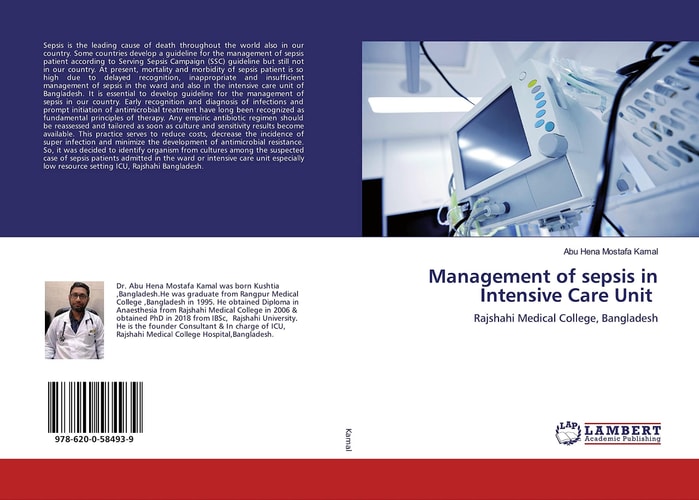
Sepsis is the leading cause of death throughout the world also in our country. Some countries develop a guideline for the management of sepsis patient according to Serving Sepsis Campaign (SSC) guideline but still not in our country. At present, mortality and morbidity of sepsis patient is so high due to delayed recognition, inappropriate and insufficient management of sepsis in the ward and also in the intensive care unit of Bangladesh. It is essential to develop guideline for the management of sepsis in our country. Early recognition and diagnosis of infections and prompt initiation of antimicrobial treatment have long been recognized as fundamental principles of therapy. Any empiric antibiotic regimen should be reassessed and tailored as soon as culture and sensitivity results become available. This practice serves to reduce costs, decrease the incidence of super infection and minimize the development of antimicrobial resistance. So, it was decided to identify organism from cultures among the suspected case of sepsis patients admitted in the ward or intensive care unit especially low resource setting ICU, Rajshahi Bangladesh.
Menrva's Summary
THE THESIS
This study investigates the critical issue of sepsis management in a low-resource Intensive Care Unit in Bangladesh, aiming to address the high mortality and morbidity rates associated with the condition. The author, Abu Hena Mustafa Kamal, highlights that sepsis is a leading global cause of death, yet Bangladesh lacks a specific management guideline, unlike some other countries that follow the Surviving Sepsis Campaign (SSC). The current delayed recognition and inappropriate management in Bangladeshi ICUs necessitate the development of a tailored guideline. This research focuses on identifying organisms from cultures among suspected sepsis patients to inform more effective and cost-efficient treatment strategies, thereby reducing superinfections and antimicrobial resistance.
THE SCOPE MAP
- Analysis of sepsis management protocols in Rajshahi Medical College's Intensive Care Unit, Bangladesh.
- Identification of common causative organisms in sepsis patients through culture and sensitivity testing.
- Discussion on the challenges of sepsis management in low-resource settings.
- Recommendations for developing a country-specific sepsis management guideline based on the Surviving Sepsis Campaign principles.
- Emphasis on early recognition, diagnosis, and prompt initiation of appropriate antimicrobial treatment.
- Strategies to reduce costs, superinfections, and antimicrobial resistance in sepsis care.
THE AUTHORITY PERSPECTIVE
This study addresses a critical public health issue in Bangladesh, focusing on the urgent need for a localized sepsis management guideline. The research highlights the gap between international standards, such as the Surviving Sepsis Campaign, and current practices in Bangladeshi ICUs, particularly in resource-limited environments. By identifying common pathogens and discussing treatment strategies, the work aims to inform the development of more effective and accessible protocols. The findings are intended to contribute to reducing the high mortality and morbidity rates associated with sepsis in the region.
Page Count:
188
Publication Date:
2020-02-13
Publisher:
LAP LAMBERT Academic Publishing
ISBN-10:
6200584931
ISBN-13:
9786200584939
Science
Non-Fiction
Health
Public Health
Critical Care
Bangladesh
Infectious Diseases
Medicine
Community Tags
Similar Books