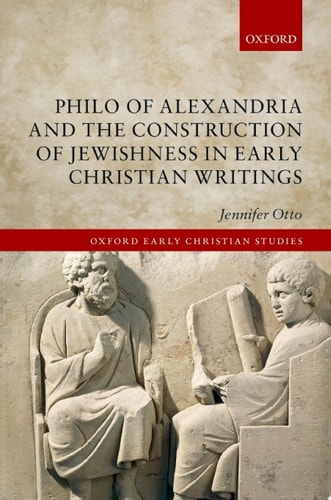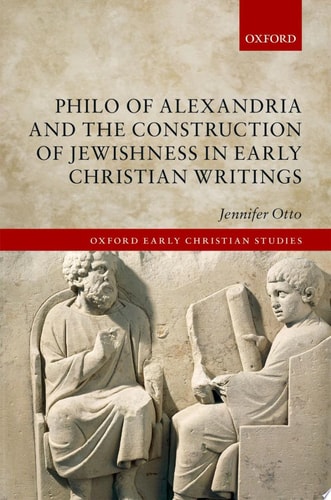
Philo of Alexandria and the Construction of Jewishness in Early Christian Writings
0
0
As an Amazon Associate and affiliate partner, Menrva Books earns from qualifying purchases. Learn more
Author Description
Philo Of Alexandria And The Construction Of Jewishness In Early Christian Writings Investigates Portrayals Of The First-century Philosopher And Exegete Philo Of Alexandria, In The Writings Of Clement Of Alexandria, Origen, And Eusebius. It Argues That Early Christian Invocations Of Philo Are Best Understood Not As Attempts Simply To Claim An Illustrious Jew For The Christian Fold, But As Examples Of Ongoing Efforts To Define The Continuities And Distinctive Features Of Christian Beliefs And Practices In Relation To Those Of The Jews. This Study Takes As Its Starting Point The Curious Fact That None Of The First Three Christians To Mention Philo Refer To Him Unambiguously As A Jew. Clement, The First In The Christian Tradition To Openly Cite Philo's Works, Refers To Him Twice As A Pythagorean. Origen, Who Mentions Philo By Name Only Three Times, Makes Far More Frequent Reference To Him In The Guise Of An Anonymous One Who Came Before Us. Eusebius, Who Invokes Philo On Many More Occasions Than Does Clement Or Origen, Most Often Refers To Philo As A Hebrew. These Epithets Construct Philo As An Alternative Near-other To Both Christians And Jews, Through Whom Ideas And Practices May Be Imported To The Former From The Latter, All The While Establishing Boundaries Between The Christian And Jewish Ways Of Life. The Portraits Of Philo Offered By Each Author Reveal Ongoing Processes Of Difference-making And Difference-effacing That Constituted Not Only The Construction Of The Jewish Other, But Also The Christian Self.
Menrva's Summary
THE THESIS
This book investigates how early Christian writers utilized the figure of Philo of Alexandria to define the boundaries of Christian identity in relation to Judaism. Jennifer Otto, a scholar of early Christianity, examines the works of Clement of Alexandria, Origen, and Eusebius to analyze their specific portrayals of the first-century philosopher. The author argues that these Christian authors did not simply appropriate Philo as a predecessor, but instead used his identity to negotiate the complex relationship between Christian and Jewish practices during the formative centuries of the church.
THE SCOPE MAP
What You Will Find
- Analysis of primary texts by Clement of Alexandria, Origen, and Eusebius.
- Examination of the shifting labels applied to Philo, including Pythagorean and Hebrew.
- A framework for understanding the construction of the religious other in late antiquity.
Scope Limits
- The study does not provide a comprehensive biography of Philo of Alexandria himself.
- The analysis is restricted to the specific writings of the three named Christian authors and does not cover the entire breadth of early Christian literature.
THE AUTHORITY PERSPECTIVE
Scholars in the field of early Christian studies recognize this work as a nuanced contribution to the understanding of how identity was constructed through the selective use of historical figures. Readers frequently note the academic density of the prose and the precision with which the author tracks the shifting rhetorical strategies of the early church fathers.
Page Count:
256
Publication Date:
2018-01-01
Publisher:
Oxford University Press
ISBN-10:
0192552546
ISBN-13:
9780192552549
Philosophy
History
Religion
Early Christianity
Jewish Studies
Theology